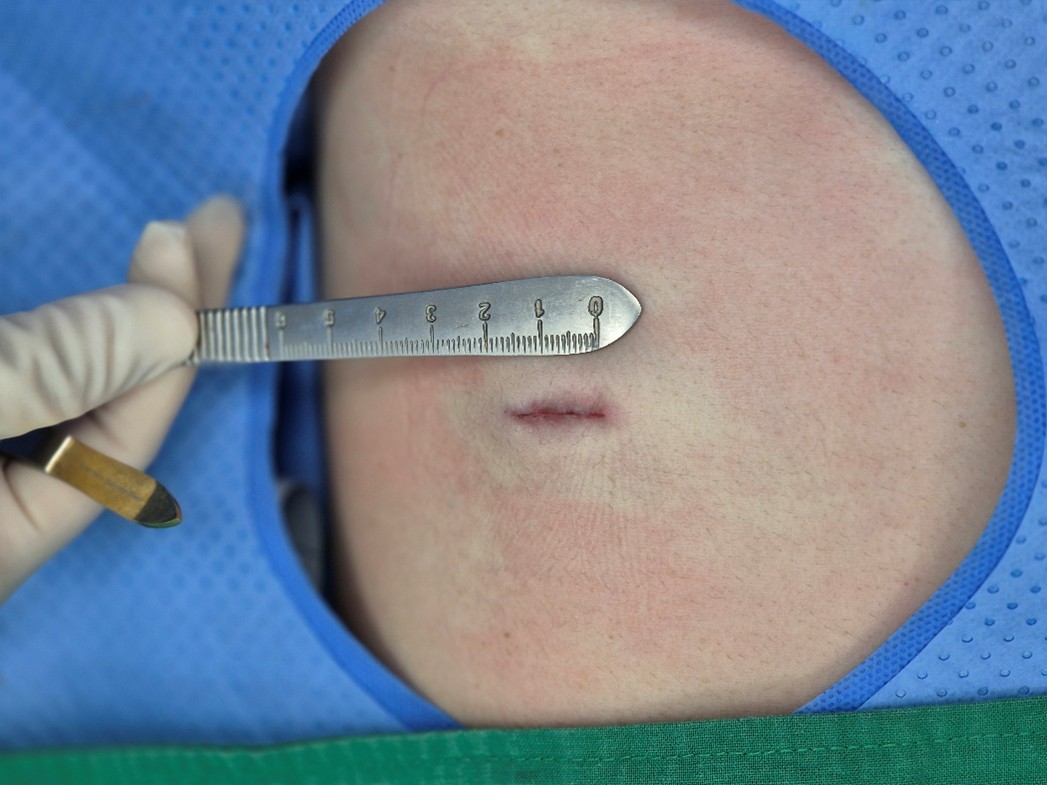
“If rib cartilage is used, will there be a visible scar?”
It’s a completely reasonable concern. But in reality, most patients find that the scar is much smaller and less noticeable than they expected.
Where is the scar located?
To harvest rib cartilage, a small incision is made on the chest.
The location is chosen very carefully to keep it as discreet as possible.
In most cases, it is placed in a low-visibility area between the chest and upper abdomen
In female patients, it can also be positioned along the natural fold under the breast, where it blends in more easily
Because of this, the scar is usually well hidden in daily life.
How large is the scar?
The incision is typically under 2 cm, although it can vary slightly depending on how much cartilage is needed. With the natural process of scar remodeling, it tends to become less prominent and appear smaller over time.
As time passes, the scar generally:
Becomes lighter in color
Flattens out
Gradually blends into the surrounding skin
Figure 1. Rib cartilage harvest scar following rhinoplasty. The incision is small and positioned in a low-visibility area of the chest. In most cases, the scar fades over time and becomes minimally noticeable
Does the scar heal well?
For most patients, healing is straightforward and the scar settles nicely.
That said, there are individual differences. Factors that can affect healing include:
Skin type
A tendency toward hypertrophic or keloid scarring
Postoperative care
From a surgical perspective, technique makes a big difference.
I focus on minimizing scarring by:
Handling tissues as gently as possible
Closing the incision in layers for better support
Using skin adhesive bond instead of external stitches, so there are no visible stitch marks
How can the scar be minimized?
Several elements contribute to a better scar outcome:
Careful selection of the incision site
Gentle surgical technique
Layered closure
No visible stitch marks on the skin surface
Consistent postoperative care
If needed, treatments such as scar creams or laser therapy can further improve the final appearance.
Will the scar be noticeable in everyday life?
In most cases:
It is not visible when wearing normal clothing
It is difficult to notice unless someone is specifically looking for it
Many patients tell me that after a few months, they barely think about it anymore.
Figure 2. At 1 year postoperatively, the scar is subtle and can be harder to notice than temporary marks left by clothing.
Should the scar be a reason to avoid rib cartilage?
In most situations, no.
Rib cartilage is often chosen because it provides strong and reliable structural support, especially in more complex cases.
So the decision should be based on the overall surgical plan rather than the scar alone.
Final thoughts
A small chest scar is part of the procedure, but it is usually subtle, well hidden, and continues to improve over time.
When the surgery is performed carefully, the benefits of rib cartilage often far outweigh concerns about scarring.