Every Revision Begins by Understanding Why the First Surgery Failed.
Secondary rhinoplasty is not about making small adjustments.
It begins with identifying structural problems, restoring stability, and creating results that can last.
Revision Rhinoplasty Is Not Simply a Second Rhinoplasty
Revision rhinoplasty is fundamentally different from primary rhinoplasty.
The nasal structure may already have been altered, weakened, or scarred by previous surgery. Cartilage may be limited, internal support may be unstable, and the cause of the patient’s concern may not be visible from the outside alone.
For this reason, successful revision surgery begins with a careful assessment of what was changed, why the previous result became unsatisfactory, and which structures must be restored before any aesthetic refinement is considered.
At Y.YOUNG Plastic Surgery, revision rhinoplasty is approached as a process of structural diagnosis and reconstruction—not simply another attempt to reshape the nose.
Scar Tissue and Adhesion
Previous surgery can create internal scar tissue that limits movement and makes precise correction more difficult.
Weakened Nasal Support
Over-resection or repeated surgery may weaken the framework that supports the nasal tip and bridge.
Limited Cartilage
Septal cartilage may already have been used, requiring careful evaluation of alternative graft materials.
Functional Concerns
Nasal obstruction, collapse, or asymmetry may need to be addressed together with the external appearance.
Revision Rhinoplasty Is Not Simply a Second Rhinoplasty
Common Reasons Patients Seek Revision Rhinoplasty
Overdone Nose
An over-reduced nose may appear pinched, unnatural, or disproportionate. Revision focuses on restoring structural balance rather than simply increasing volume.
Crooked Nose
Persistent asymmetry may result from underlying structural deviation, scar tissue, or healing differences.
Contracted Nose
Scar contracture can shorten the nose, distort its shape, and require complex structural reconstruction.
Drooping Tip
Weak tip support can lead to progressive drooping after previous surgery, requiring reinforcement of the nasal framework.
Breathing Problems
Functional issues such as nasal obstruction or valve collapse are often addressed together with aesthetic concerns.
Unsatisfactory Result
When the overall appearance does not harmonize with the face, revision begins with identifying the underlying cause—not simply reshaping the nose.
Our Approach to Revision Rhinoplasty
Every revision rhinoplasty requires a different solution. Rather than following a standardized technique, our approach begins with identifying the underlying cause of the previous outcome and developing a surgical plan based on each patient’s anatomy, structural condition, and long-term goals.
Comprehensive Evaluation
Every revision begins with a detailed assessment of the nasal structure, scar tissue, skin condition, and functional concerns.
Personalized Surgical Planning
No two revision procedures are identical. Every surgical plan is customized according to the patient’s previous surgery and desired outcome.
Structural Reconstruction
When structural support has been weakened, rebuilding the framework becomes the priority before aesthetic refinement.
Functional & Aesthetic Balance
Revision surgery should improve both appearance and nasal function while maintaining harmony with the rest of the face.
Long-Term Stability
The objective is not simply an immediate improvement, but a result that remains stable and natural over time.
Revision Rhinoplasty Before & After
Every revision rhinoplasty presents a unique challenge. Differences in anatomy, previous surgical techniques, scar formation, and tissue quality mean that no two cases require the same solution.
Rather than pursuing dramatic changes, our goal is to restore structural balance, improve nasal function when necessary, and create results that appear natural from every angle.
The following cases demonstrate how individualized surgical planning can address a wide range of revision concerns while maintaining long-term stability.
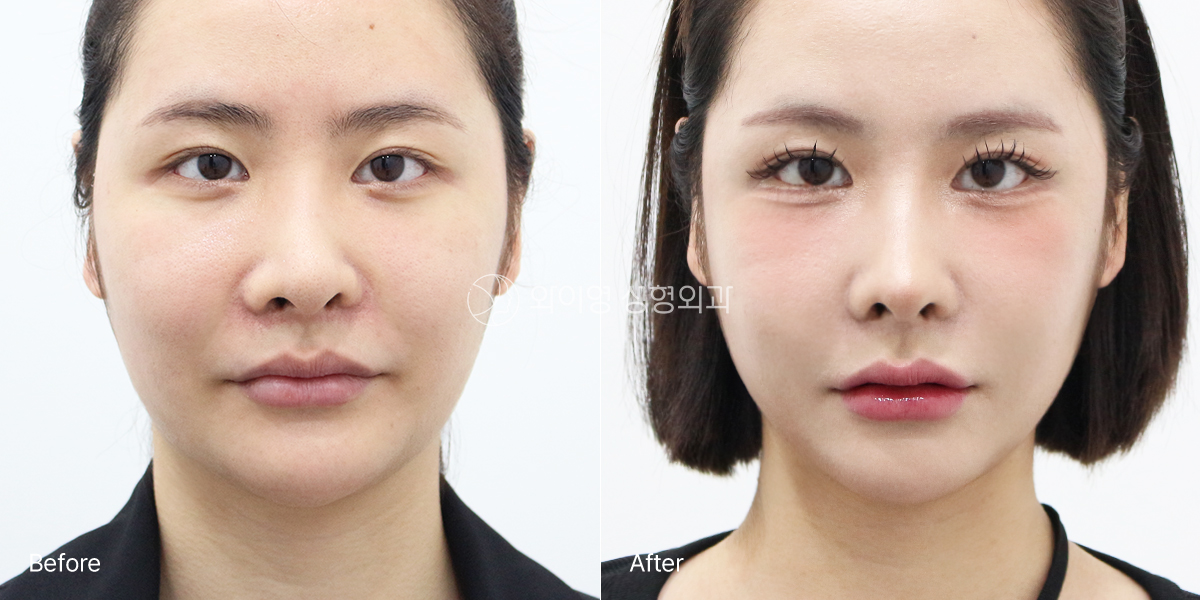
A crooked nose following previous rhinoplasty often reflects underlying structural imbalance rather than a simple cosmetic issue. Revision surgery focuses on restoring nasal alignment, tip support, and overall facial harmony.
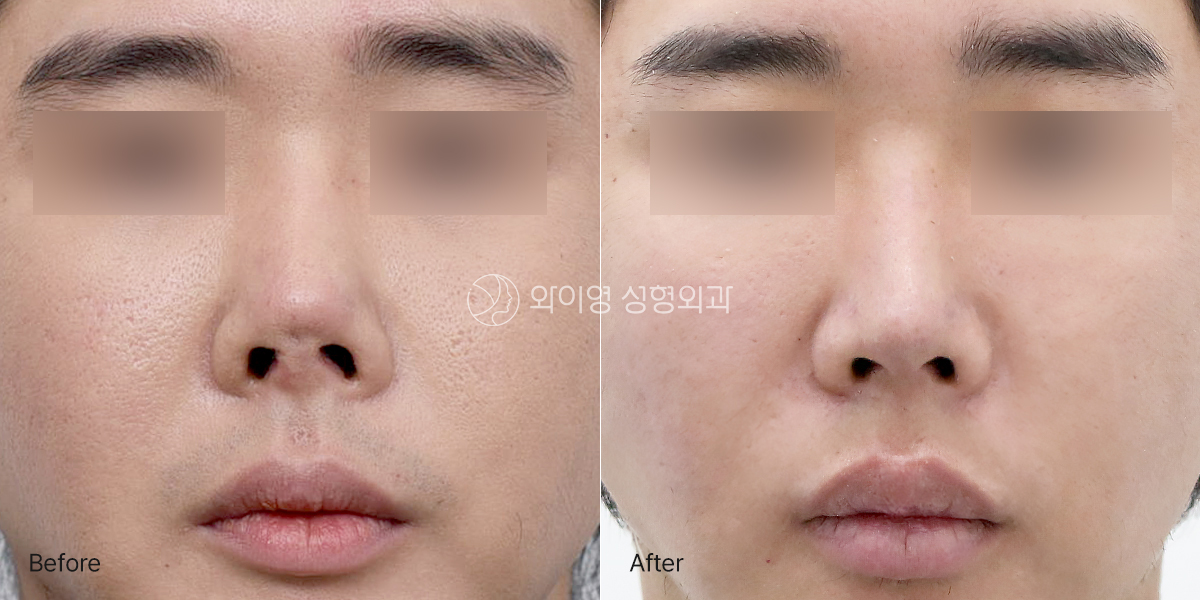
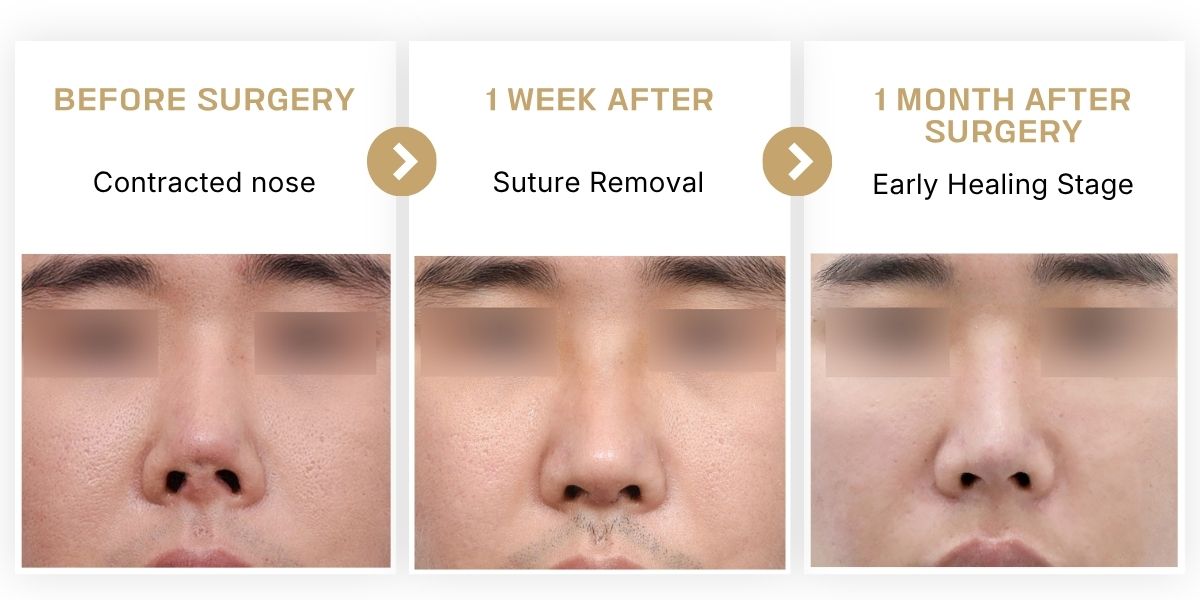
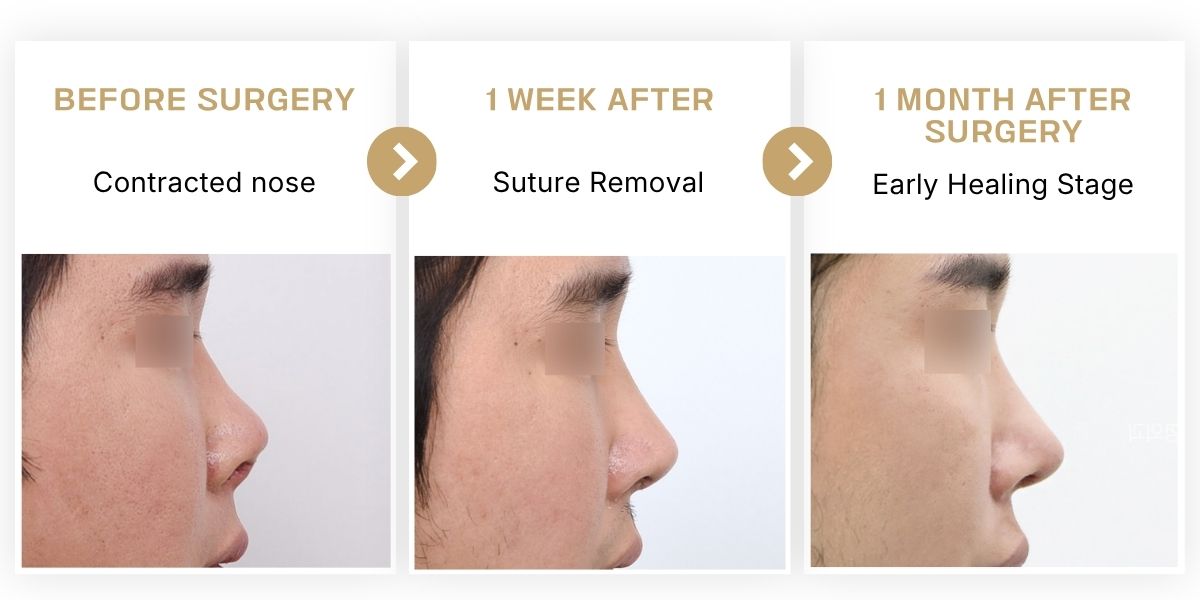
1-month result after male contracted nose reconstruction using autologous rib cartilage without a silicone implant.
A contracted nose after previous rhinoplasty often reflects structural contraction rather than a cosmetic concern alone. Revision rhinoplasty restores nasal length, tip support, and facial balance through structural reconstruction.
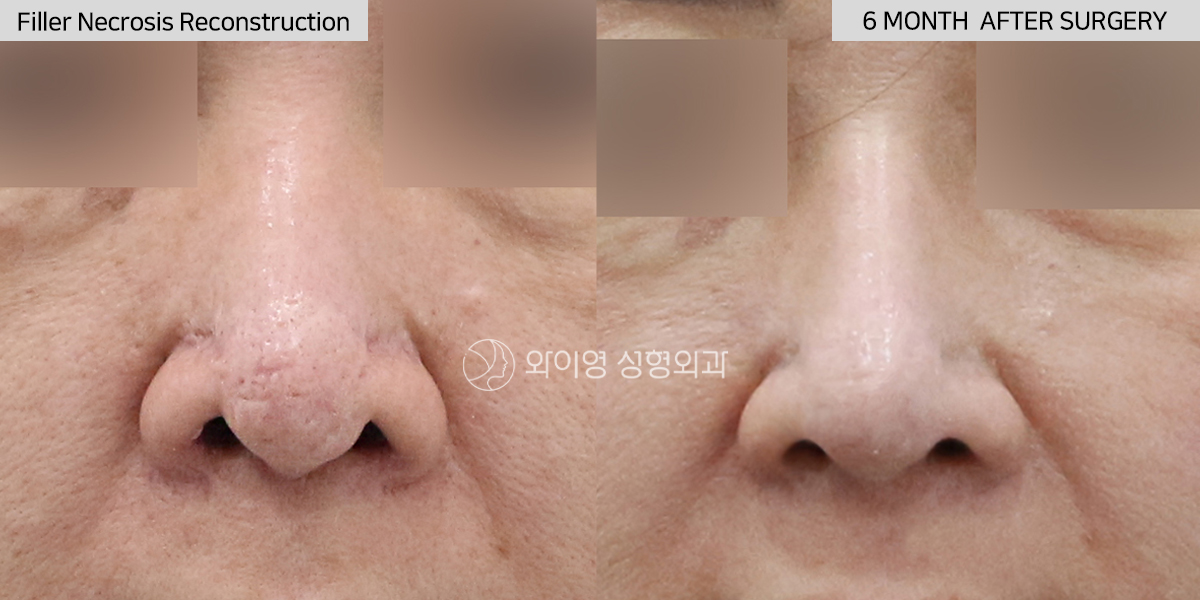
Six-month postoperative result after nasal reconstruction for filler necrosis using autologous rib cartilage and a composite ear graft. Performed by a female revision rhinoplasty specialist at Y-Young Plastic Surgery in Gangnam, Seoul, Korea.
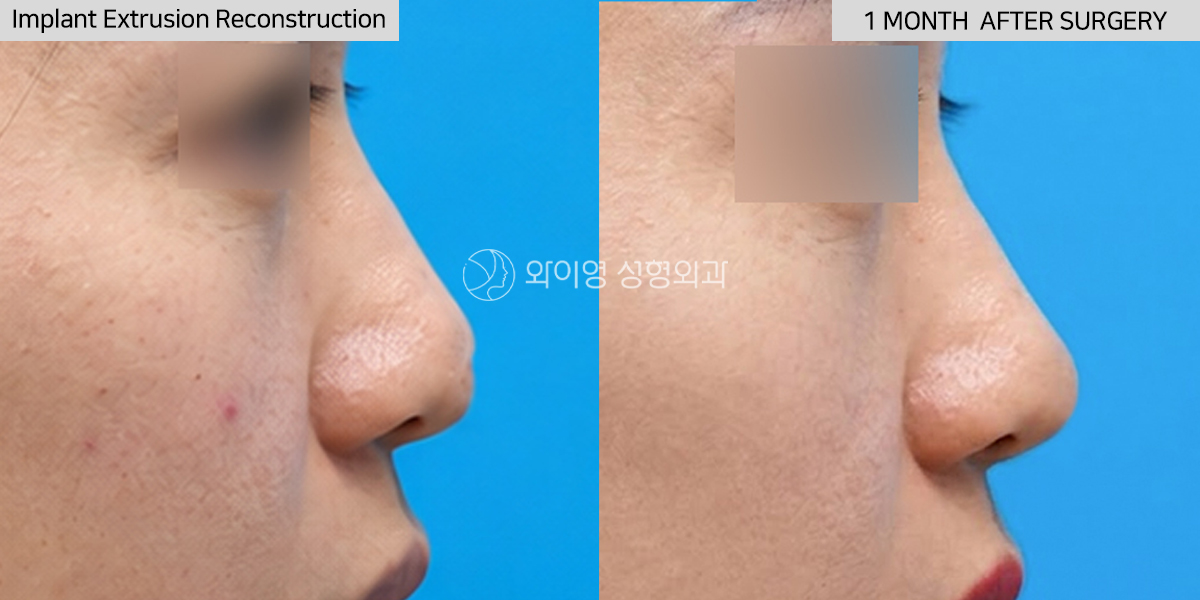
One month after complex reconstruction following silicone implant extrusion through the nasal tip. After improving scarred soft tissue with regenerative treatment, the nose was reconstructed using autologous rib cartilage to restore healthy skin, stable structural support, and a natural appearance.
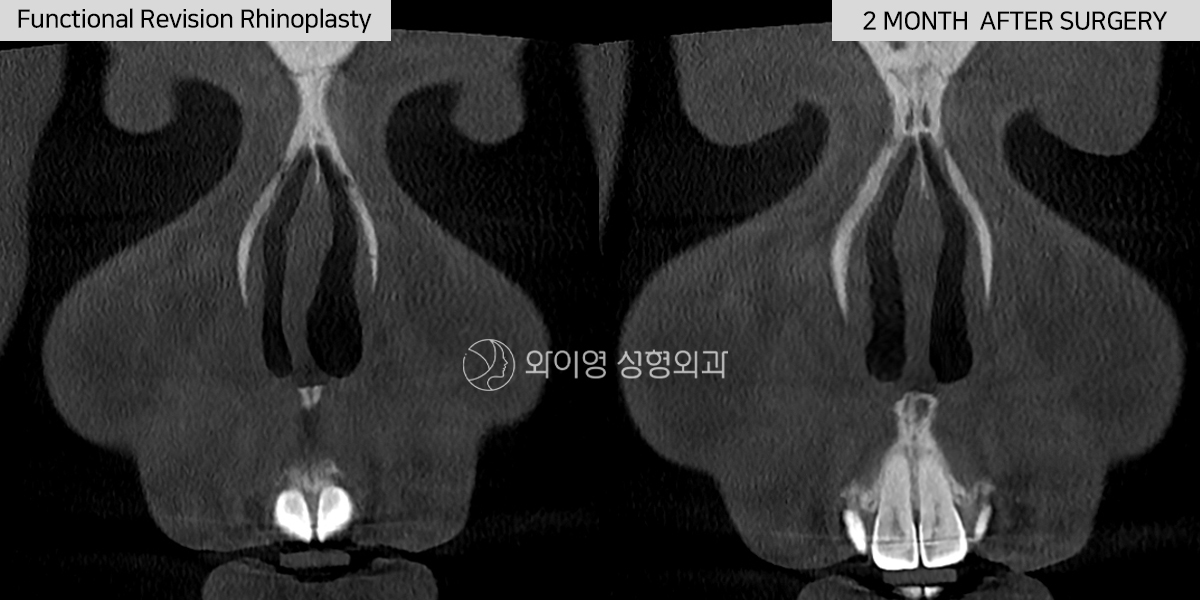
CT images before and two months after functional revision rhinoplasty. A severely deviated septum caused by previous rhinoplasty and excessive silicone implantation was reconstructed to restore nasal alignment, structural stability, and improved breathing.
Recovery following revision rhinoplasty is often more gradual than recovery after primary surgery.
Because revision procedures frequently involve scar tissue, structural reconstruction, or cartilage grafting, the healing process requires patience. Swelling gradually subsides over several months, while the final contour continues to refine as the tissues stabilize.
Although every patient heals differently, long-term improvement should be evaluated over time rather than immediately after surgery.
Why Patients Travel to Y.Y Plastic Surgery for Revision Rhinoplasty
Choosing a surgeon for revision rhinoplasty is one of the most important decisions a patient can make. Because every revision presents unique anatomical challenges, successful outcomes depend on careful evaluation, individualized planning, and meticulous surgical execution.
At Y.YOUNG Plastic Surgery, revision rhinoplasty is approached with a commitment to restoring both structural integrity and natural facial harmony. Every treatment plan is developed according to the patient’s previous surgery, current anatomy, and long-term goals rather than following a standardized technique.
From the initial consultation to postoperative care, our team is dedicated to providing a personalized experience for both domestic and international patients seeking complex nasal revision.
Online Consultation
Submit your photos and surgical history for a personalized preliminary evaluation before traveling.
Personalized Surgical Planning
Every surgical plan is tailored to your anatomy, previous procedures, and individual goals.
Dedicated Patient Coordination
Our international patient team assists with scheduling, communication, and travel planning throughout your journey.
Comprehensive Follow-Up Care
We remain committed to your recovery with continued guidance and postoperative support after surgery.
REVISION RHINOPLASTY SURGERY GUIDE
Frequently Asked Questions
Find answers to common questions about revision rhinoplasty, including surgical timing, recovery, candidacy, structural concerns, and long-term outcomes.
Revision rhinoplasty may be appropriate if you remain dissatisfied with the appearance or function of your nose after a previous surgery. A thorough evaluation is necessary to determine the underlying cause and whether revision is recommended.
In most cases, it is recommended to wait until the nose has fully healed before considering revision surgery. This often takes 6 to 12 months, although the appropriate timing varies depending on the individual situation.
Yes. Revision procedures are generally more complex because of scar tissue, altered anatomy, and reduced availability of cartilage. Every revision requires careful planning and individualized surgical strategies.
Not every patient requires cartilage grafting. The need depends on the existing nasal support, previous surgeries, and the goals of the revision procedure.
If breathing difficulties are related to structural problems such as septal deviation or weakened nasal support, functional improvement can often be addressed together with aesthetic correction.
Initial recovery usually occurs within the first few weeks, but swelling continues to improve over several months. The final result often becomes more apparent between 6 and 12 months after surgery.
Most revision rhinoplasty procedures use carefully planned incisions that heal inconspicuously. Scar visibility depends on the surgical approach and each patient’s healing process.
Not always. The possibility of revision depends on the condition of the skin, cartilage, scar tissue, and remaining structural support. Some limitations may exist, and these should be discussed during consultation.
Yes. We provide online consultations, personalized surgical planning, and dedicated coordination for international patients throughout their treatment journey.
The goal is not simply to change the appearance of the nose again. Revision rhinoplasty aims to restore structural stability, improve facial harmony, and achieve a natural, long-lasting result whenever possible.
REVISION RHINOPLASTY IN KOREA
Request a Revision Rhinoplasty Evaluation
Every revision rhinoplasty presents a different challenge.
Our evaluation focuses on understanding the cause of the previous surgery, analyzing nasal structure, scar tissue, cartilage support, skin condition, and breathing function before recommending the most appropriate surgical approach.