Many patients considering rhinoplasty say something similar during consultation:
“My nose looks wide from the front.”
“My nasal tip looks round and bulbous.”
“I want a more defined tip, but I don’t want it to look artificial.”
A wide or bulbous nasal tip is one of the most common concerns in rhinoplasty, particularly among Asian patients.
However, creating a slimmer nasal tip is not simply a matter of removing more cartilage.
The appearance of the nasal tip is determined by several factors working together: the shape and strength of the cartilage, the thickness of the skin and soft tissue, the width of the nasal base, and the structural support beneath the tip.
Understanding which of these factors is responsible for the width is the first step toward achieving a natural-looking result.
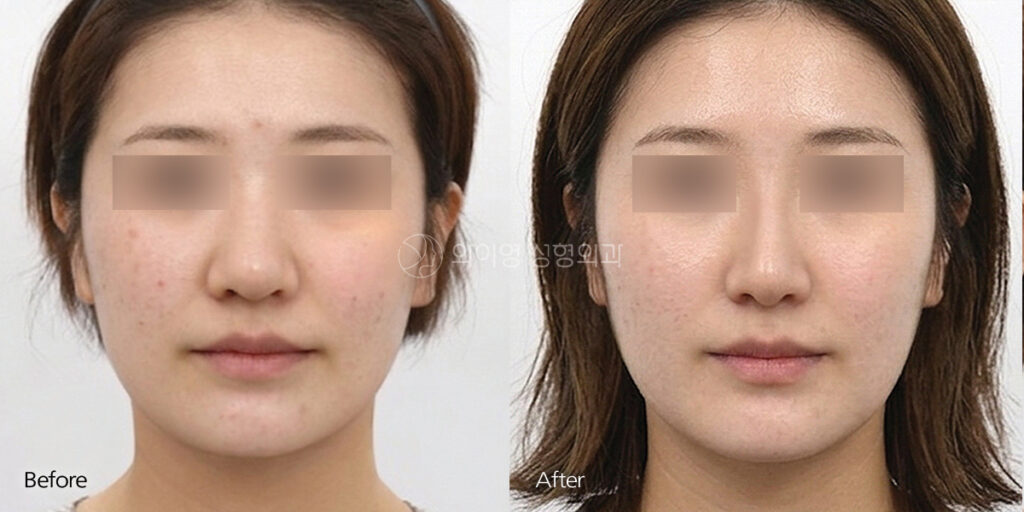
What Is a Bulbous Nasal Tip?
A bulbous nasal tip generally refers to a tip that appears broad, round, or poorly defined when viewed from the front or at a 45-degree angle.
Instead of having clear tip-defining points, the lower part of the nose may appear relatively wide or rounded.
But not every bulbous nose has the same cause.
Some patients have large or widely positioned lower lateral cartilages. Others have relatively weak cartilage covered by thick skin and abundant soft tissue.
In many patients, both factors are present.
This is why two noses that look similarly “bulbous” before surgery may require completely different surgical approaches.
1. Thick Skin Can Make the Nasal Tip Look Wider
One of the most important factors is skin thickness.
The final contour of the nose is not determined by cartilage alone. The reconstructed cartilage framework must be visible through the skin and soft-tissue envelope covering it.
With thin skin, even subtle changes in the underlying cartilage may become visible.
With thick skin, the opposite problem occurs.
Even when the cartilage underneath has been carefully reshaped, thick skin and soft tissue can mask the new definition.
This is especially important in Asian rhinoplasty, where relatively thick nasal skin and soft tissue are commonly encountered.
Therefore, a patient with thick nasal skin may not achieve a dramatically sharp nasal tip simply by removing or narrowing cartilage.
The goal should instead be to create enough structural definition underneath the skin while maintaining a natural balance.
Learn more about how thick nasal skin affects tip definition and recovery after rhinoplasty.
2. The Cartilage Underneath May Be Wide or Weak
The shape of the lower lateral cartilages plays a major role in determining nasal tip width.
If these cartilages are broad, curved outward, or positioned far apart, the tip can appear round and wide.
In these cases, rhinoplasty may involve techniques that reshape and reposition the existing cartilage.
But there is another common situation.
The cartilage may actually be relatively weak.
When weak cartilage is covered by thick skin and soft tissue, the nasal tip can look broad even though there is not necessarily “too much cartilage.”
In this situation, aggressively removing cartilage can be counterproductive.
Why Simply Removing More Cartilage Is Not Always Better
Patients sometimes assume:
“If my nasal tip is big, shouldn’t more cartilage be removed?”
Not necessarily.
Cartilage is not only responsible for the shape of the nose. It also provides structural support.
Removing too much cartilage can weaken the nasal tip and may contribute to problems such as loss of projection, pinching, asymmetry, or an unnatural contour.
For some bulbous noses, the better strategy is not aggressive reduction but structural reconstruction.
The existing cartilage may be reshaped, repositioned, sutured, or reinforced with additional cartilage when necessary.
The objective is to create a narrower and more defined framework that can adequately support the overlying skin.
3. Soft Tissue Also Matters
Between the skin and cartilage lies a layer of soft tissue.
In some patients, this tissue is relatively thick, particularly around the nasal tip and supratip area.
This additional volume can contribute to a rounded appearance.
Depending on the individual anatomy, careful soft-tissue management may be considered during rhinoplasty.
However, this area must be treated conservatively.
The nasal skin requires a healthy blood supply, and overly aggressive thinning can create unnecessary risks.
Therefore, soft-tissue reduction is not something that should automatically be performed in every patient with a bulbous nose.
The decision should depend on the thickness and characteristics of the patient’s skin and soft tissue.
4. Tip Projection Can Change How Wide the Nose Looks
Interestingly, a nasal tip does not always need to become physically much narrower to look narrower.
Projection matters.
A nose with insufficient tip projection may appear flat and broad from the front.
By creating appropriate tip support and projection, the tip can gain clearer definition and appear more refined.
This is particularly relevant in Asian rhinoplasty, where a broad tip may coexist with relatively weak tip support.
But projection also needs to be controlled carefully.
A tip that is projected too aggressively may look pointed, stiff, or unnatural.
The goal is not simply to create the smallest possible nose.
It is to create a nose that fits the proportions of the face.
5. Why Does My Nose Still Look Bulbous Shortly After Rhinoplasty?
This is another common concern.
A nasal tip that looks wide during the early recovery period does not necessarily mean that the surgery failed to narrow the tip.
Swelling after rhinoplasty is not distributed evenly throughout the nose.
The nasal tip can retain swelling longer than other areas, and patients with thicker skin may notice prolonged swelling and reduced definition.
As the swelling gradually decreases and the skin settles over the new framework, tip definition can continue to change.
This is why the appearance of the nasal tip during the early postoperative period should not be considered the final result.
Thick Skin vs. Postoperative Swelling
These two issues can sometimes look similar.
A patient may feel that the nasal tip is still too large after surgery, but the apparent width may be caused by:
- residual postoperative swelling,
- naturally thick skin,
- thick soft tissue,
- the underlying cartilage structure,
- scar tissue during healing,
- or a combination of several factors.
Determining the cause is important before considering any additional treatment.
Especially in revision rhinoplasty, making decisions too early can lead to unnecessary surgery.
Bulbous Tip Revision Rhinoplasty
Revision surgery for a persistent bulbous tip can be more complicated than primary rhinoplasty.
After previous surgery, the surgeon needs to determine what was done to the original cartilage and how much structural support remains.
The problem may not be that “too little was removed.”
In some revision cases, too much cartilage may already have been removed, leaving insufficient support beneath thick skin.
In that situation, further reduction could make the problem worse.
Revision surgery may instead require reconstruction of the nasal framework using remaining septal cartilage, ear cartilage, rib cartilage, or another appropriate material depending on the individual case.
This is why revision rhinoplasty should begin with a structural diagnosis rather than simply trying to make the nose smaller again.
Natural Tip Refinement Is About Balance
A refined nasal tip does not necessarily mean an extremely narrow or pointed tip.
Especially in Asian rhinoplasty, an overly narrow tip can look artificial when it does not match the nasal bridge, nostrils, or overall facial proportions.
At Y-Young Plastic Surgery, we evaluate the nasal tip from multiple angles rather than focusing only on frontal width.
Important considerations include:
- nasal tip width,
- skin thickness,
- cartilage strength and shape,
- tip projection,
- tip rotation,
- nostril shape,
- alar width,
- nasal bridge width,
- and the overall relationship between the nose and face.
The surgical plan should be based on which anatomical factors are actually creating the bulbous appearance.
Can a Bulbous Nose Be Corrected Without a Silicone Implant?
Yes.
Correcting a bulbous nasal tip and raising the nasal bridge are separate issues.
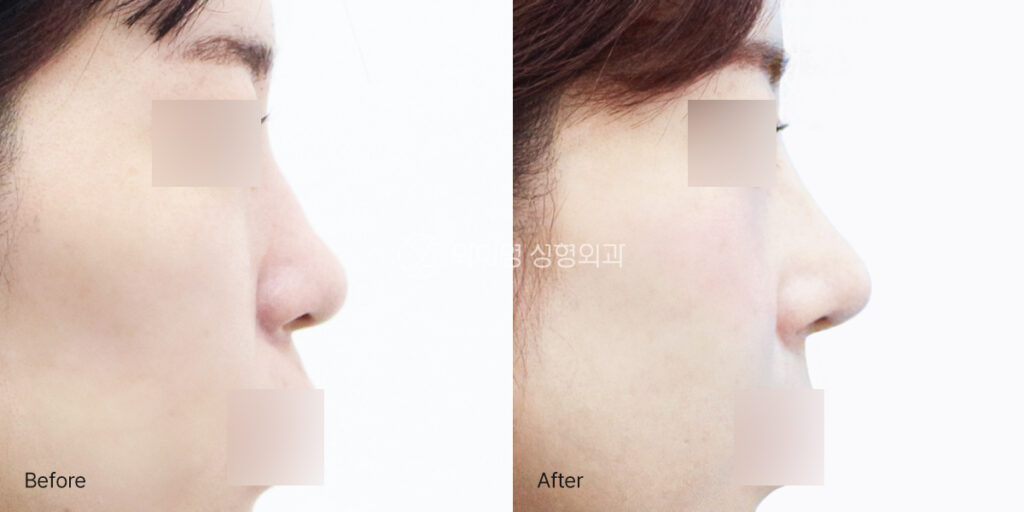
If the main concern is tip width, shape, projection, or support, it may be possible to improve the nasal tip using the patient’s own cartilage without placing a silicone implant in the nasal bridge.
However, whether implant-free rhinoplasty is appropriate depends on the existing nasal structure and the amount of change desired.
For patients who prefer implant-free rhinoplasty, the available cartilage and the structural requirements of the nose should be evaluated carefully during consultation.
Final Thoughts
A bulbous nasal tip is not simply a “large nose.”
It can result from thick skin, abundant soft tissue, wide cartilage, weak cartilage, insufficient projection, or several of these factors combined.
For this reason, successful bulbous tip rhinoplasty is not about removing as much tissue as possible.
It is about identifying the anatomical cause of the width and creating a stable, well-defined framework that remains harmonious with the rest of the face.
The most natural result is often not the smallest nose, but the nose with the best proportion, definition, and structural balance.
Frequently Asked Questions
Can thick nasal skin become thinner after rhinoplasty?
Rhinoplasty does not fundamentally change a person’s natural skin type. However, changes to the underlying framework and carefully selected soft-tissue techniques can improve how the skin drapes over the nasal tip. Patients with thick skin may require more time before the final tip definition becomes visible.
How long does nasal tip swelling last after rhinoplasty?
The nasal tip commonly retains swelling longer than the bridge. The recovery timeline varies depending on skin thickness, the surgical technique, whether the operation is primary or revision rhinoplasty, and individual healing characteristics.
Can a bulbous nose become very sharp after surgery?
The achievable degree of definition depends strongly on the patient’s anatomy. Trying to create an excessively sharp tip beneath very thick skin may require unnatural structural changes. A balanced and appropriately defined tip is generally a better goal than simply making the tip as narrow as possible.
Is cartilage removal necessary for bulbous tip rhinoplasty?
Not always. Some patients benefit from cartilage reshaping or limited reduction, while others require suturing, repositioning, or reinforcement of weak cartilage. The appropriate technique depends on the cause of the bulbous appearance.
Why does my nasal tip still look wide after rhinoplasty?
During early recovery, swelling can temporarily make the tip appear wider or less defined. If the width persists after sufficient healing, factors such as thick skin, scar tissue, remaining cartilage shape, or inadequate structural support may need to be evaluated.
Can bulbous tip rhinoplasty be performed without an implant?
In selected patients, yes. Autologous cartilage from the septum, ear, or rib can be used when structural support or tip reshaping is required. The appropriate material depends on the existing anatomy and surgical goals.
Related Articles
- Why Does the Nose Tip Drop After Rhinoplasty?
- Why Is My Nose Still Crooked After Revision Rhinoplasty?
See more rhinoplasty before and after cases→

