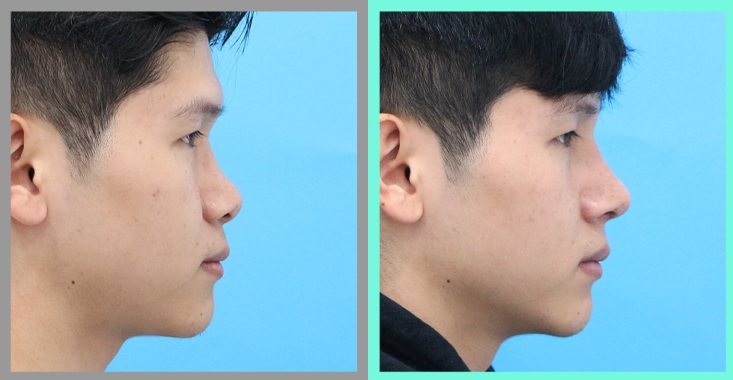
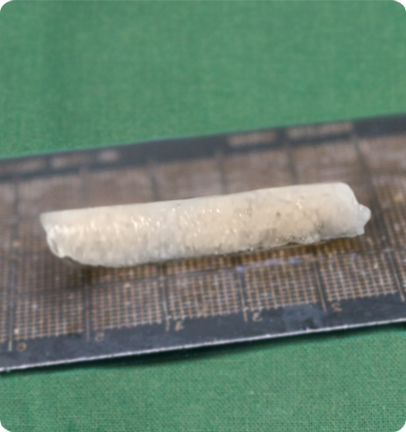
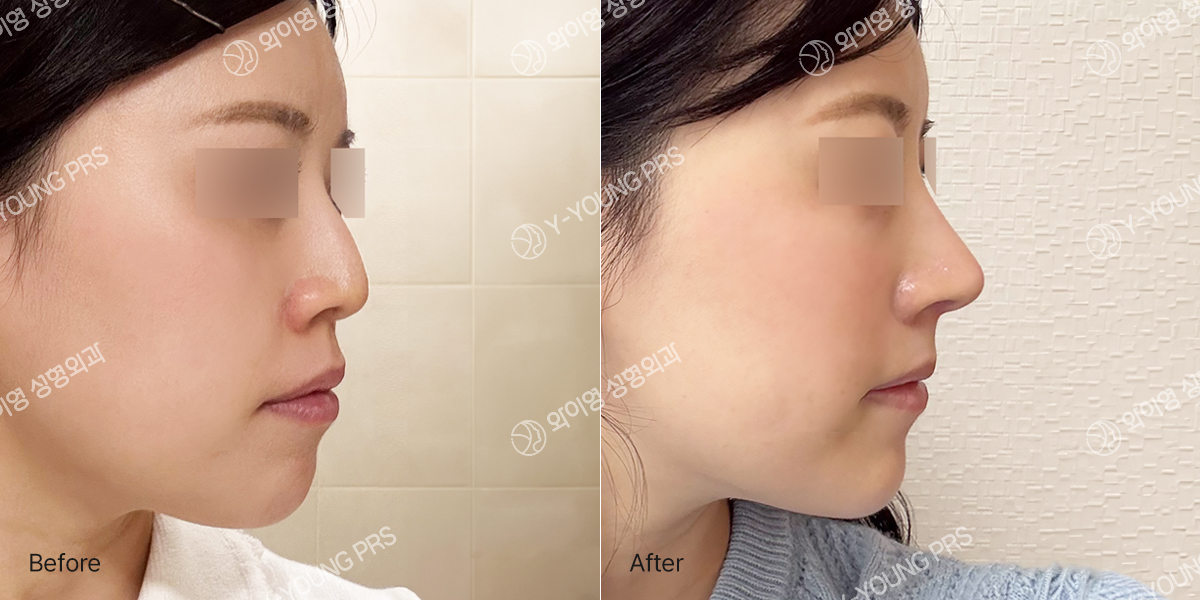
Which Creates the Most Natural Asian Rhinoplasty Result?
One of the most common questions in Asian rhinoplasty is:
“Should I use a silicone implant or rib cartilage for dorsal augmentation?”
Today, both options can produce beautiful and natural results when used appropriately.
Modern rhinoplasty is no longer about declaring one material universally superior.
Instead, the key is understanding:
- The patient’s anatomy
- Skin thickness
- Desired contour
- Degree of augmentation
- Overall facial harmony
The ideal material depends on the type of nose the patient wants to create.
Why Silicone Implants Remain Popular
Silicone implants have been used in Asian rhinoplasty for decades because they provide:
- Stable dorsal height
- Smooth contour definition
- Predictable shape
- Strong structural support
- Precise augmentation
With the development of 3D-customized implants, silicone rhinoplasty has evolved significantly from older “ready-made” implant approaches.
Modern customized silicone implants can:
- Fit the patient’s anatomy more precisely
- Reduce implant visibility
- Improve contour transition
- Create a more natural dorsal line
- Improve long-term stability
When properly designed, silicone implants can still produce elegant and very natural-looking results.
When Silicone May Be More Beneficial
Silicone implants are often particularly useful when:
- Significant dorsal augmentation is needed
- More than 4–5 mm of augmentation is required
- The skin is very thick
- A smoother dorsal contour is desired
- Detailed shape control is important
- Specific contour points, such as a subtle dorsal hump, are intentionally designed
In these situations, silicone provides structural precision and contour consistency that can sometimes be difficult to achieve with cartilage alone.
For patients who desire:
- A smoother bridge line
- Cleaner contour definition
More sculpted dorsal aesthetics
customized silicone implants may provide excellent results.
Why Rib Cartilage Can Look Very Natural
In contrast, rib cartilage often creates a softer and more organically irregular contour.
This is because natural noses are not completely smooth.
The native nasal dorsum often contains:
- Subtle transition zones
- Minor contour irregularities
- Changes in skin thickness
- Bone-cartilage junction variations
These small natural irregularities can contribute to a more “untouched” appearance.
For this reason, rib cartilage is often preferred in patients who want:
- Extremely natural dorsal contours
- Softer bridge transitions
- Less sharply defined augmentation
- A more subtle structural appearance
- Correction of a hump or irregular dorsal contour in patients who already have adequate nasal height
In many cases, rib cartilage may blend especially well in patients seeking a naturally refined rather than sculpted appearance.
What About Infection or Inflammation?
Another important consideration is how different materials behave in the setting of inflammation or infection.
When a silicone implant develops significant infection or persistent inflammatory reaction, implant removal is often necessary.
Because silicone is a foreign material, the surrounding tissue may have difficulty resolving infection completely without removing the implant.
In contrast, cartilage-based augmentation may sometimes behave differently.
When diced cartilage or autologous cartilage is used, mild inflammatory changes may occasionally improve without complete removal of the graft material.
However, this depends greatly on:
- Severity of infection
- Surgical condition
- Tissue quality
- Type of graft used
Both materials can achieve stable long-term outcomes when carefully selected and properly managed.
Does One Material Always Look Better?
Not necessarily.
Natural results depend less on the material itself and more on:
- Surgical planning
- Facial proportion
- Skin thickness
- Implant or graft design
- Structural harmony
An overly aggressive rib cartilage nose can still appear unnatural.
Likewise, a properly customized silicone implant can look extremely refined and harmonious.
The most important concept in modern rhinoplasty is not choosing the “trendiest” material.
It is choosing the material that best fits the patient’s anatomy and aesthetic goals.
Final Thoughts
Modern dorsal augmentation is no longer a simple debate between silicone and rib cartilage.
Both materials have important advantages.
In general:
- Silicone implants provide smoother contour definition and precise structural shaping
- Rib cartilage often provides softer and more organically natural transitions
The ideal choice depends on the patient’s anatomy, skin characteristics, desired contour, and overall facial harmony.
Rather than asking:
“Which material is universally better?”
the more important question is:
“Which material is most appropriate for this particular patient?”