Why Personalized Implant Design Matters in Modern Asian Rhinoplasty
Traditional rhinoplasty implants were often manufactured in standardized shapes and sizes.
While this approach may work reasonably well for some patients, every nose is different:
- Skin thickness varies
- Facial proportions differ
- Nasal asymmetry is common
- Bone and cartilage anatomy are unique to each patient
For this reason, modern Asian rhinoplasty has increasingly shifted toward individualized implant design.
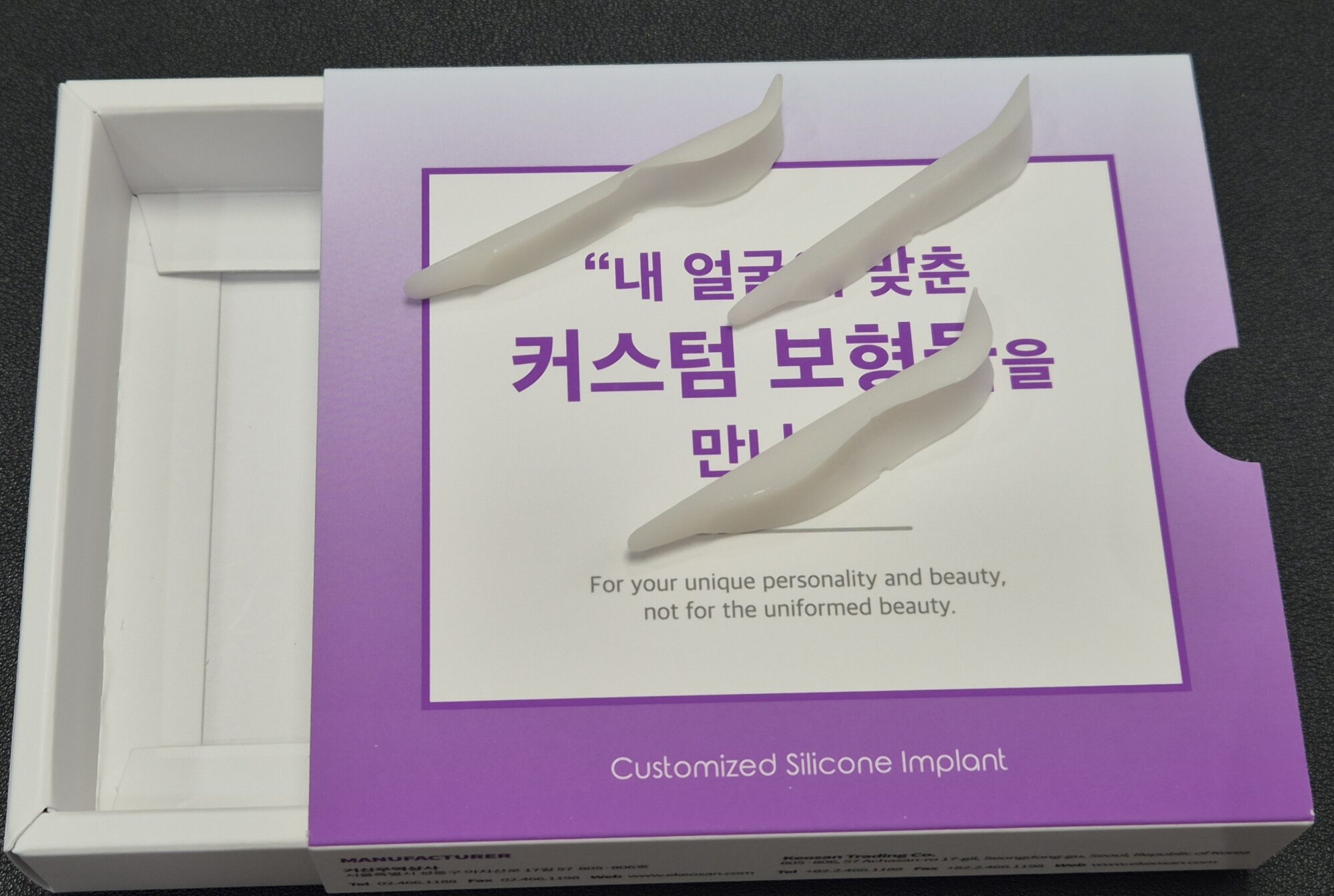
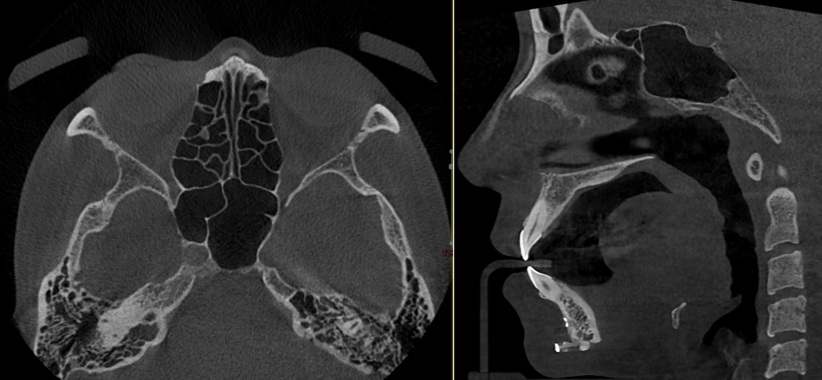
Three-dimensional customized rhinoplasty is not simply about using advanced technology.
Its true purpose is creating a nasal contour that fits the patient’s anatomy more naturally and precisely.
Why Customization Matters
In rhinoplasty, even very small differences can significantly affect the final appearance.
Factors such as:
- Skin thickness
- Nasal asymmetry
- Bridge width
- Frontal contour
- Bone-cartilage transition zones
- Facial balance
all influence how the implant appears after surgery.
A shape that looks natural in one patient may appear artificial in another.
This is why modern rhinoplasty increasingly focuses on customization rather than simply choosing a pre-made implant.
Advantages of 3D Customized Implants
1. Improved Anatomical Fit
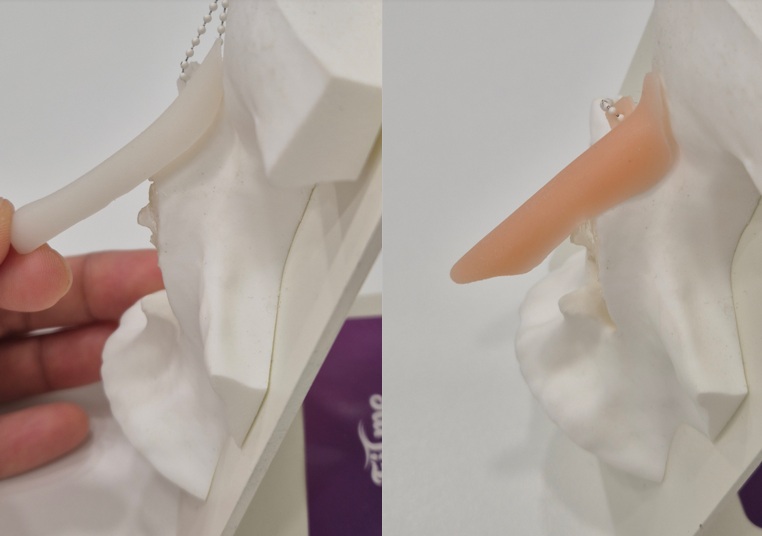
Customized implants are designed based on the patient’s individual anatomy.
This may help:
- Improve implant stability
- Reduce implant mobility
- Reduce visible implant edges
- Improve dorsal transition
Better fit often leads to a more natural appearance.
2. More Precise Shape Control
Customized implants are especially useful when patients want highly specific contour details.
For example:
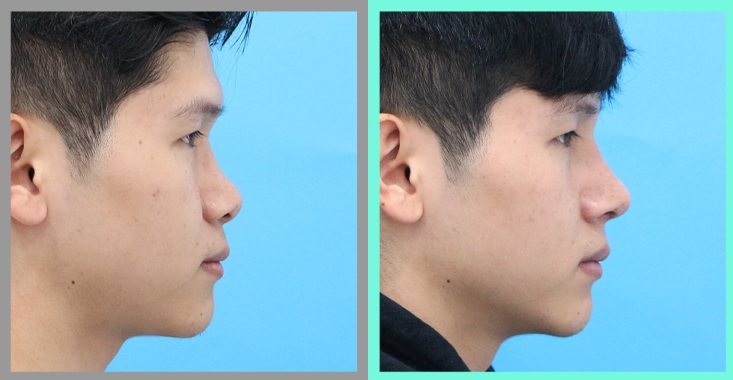
- Straight dorsum
- Slightly curved dorsum
- Straight-to-slightly-curved profile
- Subtle dorsal hump creation
- Precise dorsal height adjustment in millimeters
Because the implant is individually designed, delicate contour modifications can be planned more accurately.
3. Better Management of Skin Thickness Differences
In many Asian patients, skin thickness changes significantly along different parts of the nose.
For example:
- Thick skin over the supratip
- Thinner skin over the radix or upper dorsum
- Uneven soft tissue transitions
These differences can make standard implants appear less natural.
Customized implants may help create smoother contour transitions while adapting more appropriately to variable skin thickness.
4. Improved Asymmetry Correction
Mild nasal asymmetry is extremely common.
Standard implants may sometimes exaggerate existing asymmetry because they are not specifically designed for the patient’s anatomy.
Three-dimensional customized implants can help:
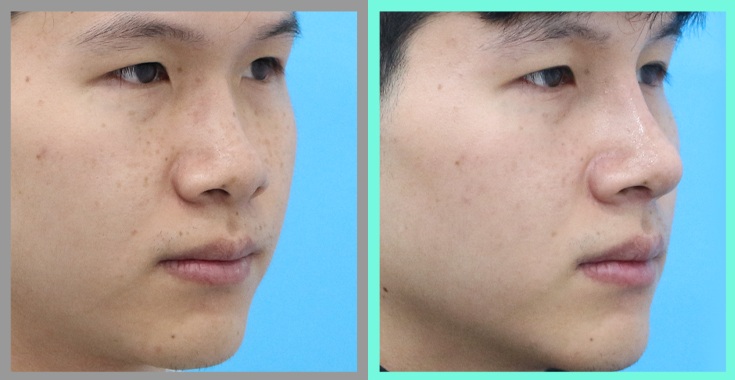
- Improve contour balance
- Better adapt to asymmetric anatomy
- Create a more harmonious frontal appearance
especially in patients with uneven nasal bone structure or dorsal deviation.
5. Floating Prevention and Stability
One concern with traditional implants is poor fit against the underlying nasal framework.
When the implant does not adapt well to the anatomy, problems such as:
- Implant mobility
- Floating appearance
- Visible edges
- Unnatural contour transitions
may become more noticeable.
Customized implants are designed to improve contact with the patient’s anatomical structure, which may help enhance long-term stability and contour integration.
Are There Any Disadvantages?
Three-dimensional customized rhinoplasty also has limitations.
Because the implant is individually manufactured for each patient:
- Additional production time is required
- Fabrication usually takes approximately 2–3 days after consultation
- The cost is generally higher than standard implants
However, for many patients seeking more precise contour control and natural integration, these trade-offs may be worthwhile.
Who May Benefit Most From 3D Customized Rhinoplasty?
Customized implants may be particularly beneficial for patients who:
- Want precise dorsal height adjustment
- Desire specific dorsal contour shapes
- Have significant skin thickness variation
- Have mild nasal asymmetry
- Want a naturally blended bridge line
- Desire subtle hump creation
- Require more stable implant fitting
- Prefer refined rather than exaggerated augmentation
Final Thoughts
Modern rhinoplasty is no longer about simply making the nose higher.
The goal is creating a nasal contour that harmonizes naturally with the patient’s:
- Facial proportions
- Skin characteristics
- Bone structure
- Individual aesthetic balance
Three-dimensional customized rhinoplasty allows more personalized structural planning and more refined contour control than traditional one-size-fits-all implants.
Ultimately, the most natural result often comes not from using the largest implant, but from using the implant that best fits the individual patient.