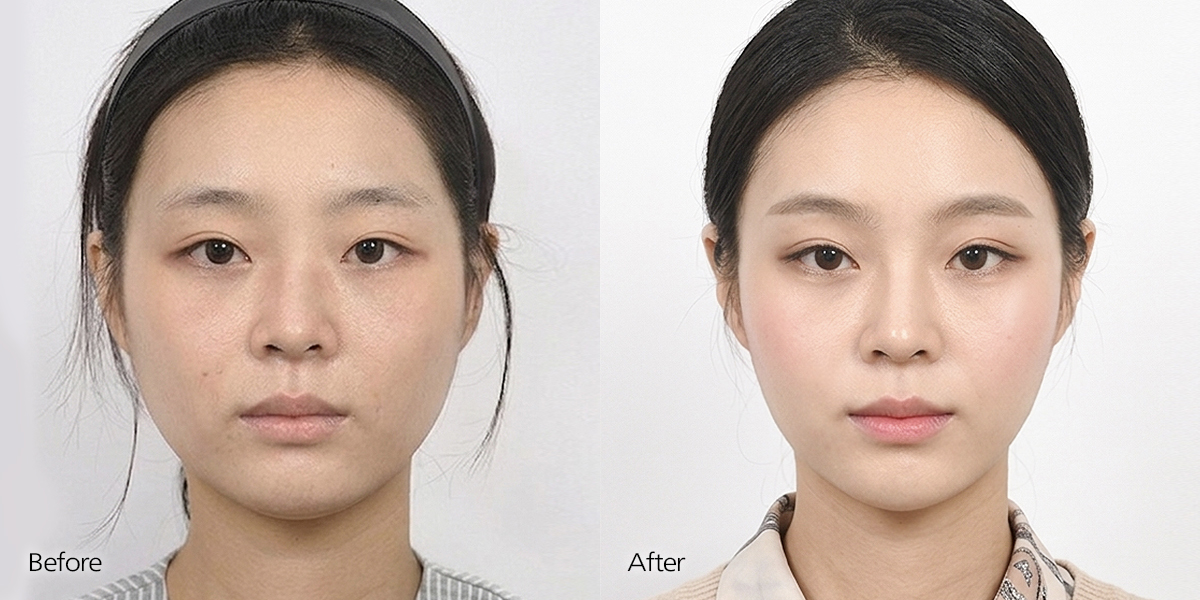
One of the most common concerns patients have before jaw contouring surgery is:
“Will my face sag after surgery?”
The short answer is:
Not always.
But in some patients, sagging can occur depending on several important factors.
Modern jaw contouring surgery is not simply about removing as much bone as possible.
The relationship between bone structure, soft tissue, skin elasticity, and facial balance must all be considered together.
Why Can Sagging Happen After Jaw Contouring?
The facial soft tissue is supported by the underlying bone structure.
When the mandibular angle is excessively reduced, the overlying soft tissue may lose structural support and appear heavier or looser over time.
This is more likely to occur when:
- Excessive bone resection is performed
- The patient already has reduced skin elasticity
- There is a large amount of soft tissue or facial fullness
- The skin naturally becomes thinner and looser with aging
In other words, sagging is usually not caused by jaw contouring surgery alone, but by the interaction between surgery and the patient’s existing soft tissue characteristics.
Why Over-Resection Can Create Unnatural Results
In the past, some contouring surgeries focused heavily on aggressively cutting the mandibular angle to create an extremely sharp V-line.
While this may initially appear slimmer, excessive reduction can sometimes lead to:
- Loss of natural mandibular structure
- A flatter or artificial side profile
- Increased risk of soft tissue sagging
- An unbalanced lower facial contour
Today, modern contouring philosophy has shifted away from simply “removing more bone.”
Instead, the goal is:
- Natural contour preservation
- Smoother transitions
- Structural harmony
- Balanced frontal slimming
This is one reason why cortical bone reduction has become increasingly important in modern jaw contouring surgery.
Why Cortical Bone Reduction Matters
Rather than excessively removing the mandibular angle itself, cortical bone reduction allows refinement along the outer mandibular surface while preserving the overall framework.
This approach may help:
- Maintain a more natural side profile
- Improve frontal slimming effect
- Reduce abrupt contour changes
- Preserve soft tissue support
In many patients, preserving structural support is just as important as achieving a slimmer facial appearance.
Which Patients Are More Prone to Sagging?
Certain patients naturally have a higher risk of postoperative soft tissue laxity.
Examples include:
- Patients with poor skin elasticity
- Patients with heavier facial soft tissue
- Older patients with age-related skin laxity
- Patients seeking excessively aggressive reduction
This is why individualized surgical planning is essential.
Not every patient benefits from maximum reduction.
In some cases, patients with a relatively small or retruded jaw may actually look less balanced if too much bone is removed.
How Can Sagging Be Minimized?
Modern jaw contouring surgery focuses not only on bone reduction, but also on soft tissue management.
Several principles are important:
Appropriate Amount of Bone Reduction
Removing the right amount of bone — not the maximum amount — is critical.
Preserving natural structural support helps maintain long-term facial balance.
Careful Soft Tissue Handling
During closure, maintaining the natural anatomical tissue layers is very important.
Precise layered closure may help preserve soft tissue stability and healing.
In selected cases, periosteal tightening techniques may also be performed for additional support.
Combining Adjunctive Procedures When Necessary
In some patients, additional procedures may help optimize soft tissue contour.
For example:
- Simple lifting procedures
- Thread lifting
- Skin tightening treatments
These are not necessary for every patient, but may be beneficial in selected cases with preexisting laxity.
Final Thoughts
Jaw contouring surgery does not automatically cause sagging.
However, excessive reduction without considering soft tissue support and skin condition can increase the risk of an unnatural or heavy appearance over time.
Modern contouring surgery is no longer about creating the sharpest possible jawline.
It is about preserving harmony, maintaining structural balance, and creating natural long-term results that fit the patient’s anatomy and soft tissue characteristics.