Why Some Patients Need Secondary Zygoma Surgery
Cheekbone reduction surgery is one of the most effective facial contouring procedures for creating a softer and slimmer facial appearance. However, not every patient is satisfied after their first surgery.
In many revision cases, the issue is not a complication, but rather insufficient reduction of the cheekbone complex. Patients often feel that their face still looks wide from certain angles even after surgery.
Especially in Asian facial contouring, both the:
- 45-degree cheekbone prominence
- lateral zygomatic arch
must be reduced in harmony.
If only one area is adequately repositioned while the other remains prominent, the facial width may still appear broad or unbalanced.
Common Reasons for Revision Zygoma Reduction
Patients usually seek revision surgery because:
- The side cheekbone was not reduced enough
- The 45-degree cheekbone remains prominent
- The facial width still appears broad in photos
- The contour looks asymmetrical
- The overall slimming effect feels insufficient
While complications such as severe bone gaps or fixation problems can also require revision surgery, many secondary procedures are performed simply because the first surgery did not create enough aesthetic change.
Two Main Revision Strategies
Revision surgery depends heavily on the location and effectiveness of the previous osteotomy line.
1. Additional Setback Along the Previous Osteotomy
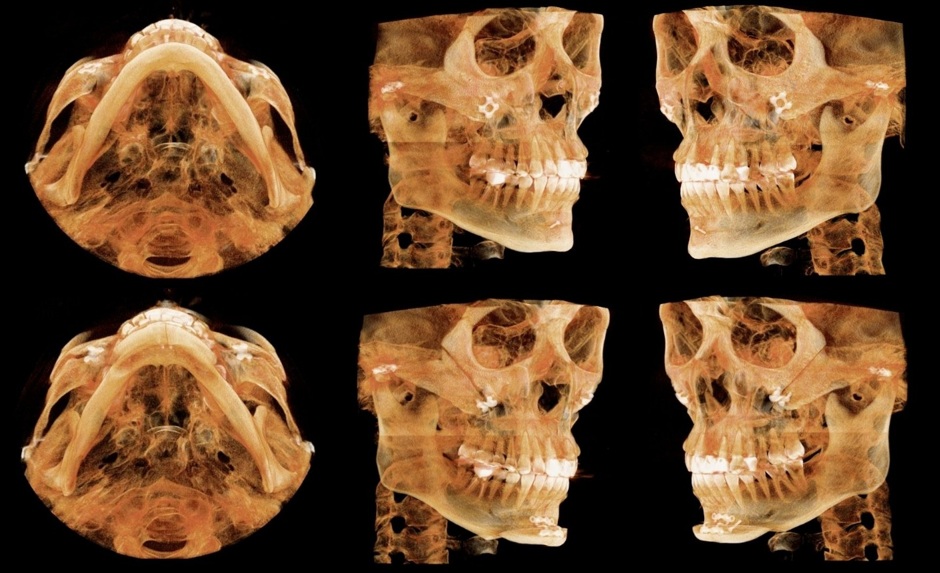
In some revision cases, the original osteotomy design is appropriate, but the amount of setback performed during the first surgery was not sufficient.
In these patients, the previous osteotomy line can be carefully reopened and additional setback can be performed to further reduce the residual prominence of the cheekbone.
The CT images below show one of my actual revision cases in which additional inward repositioning was performed along the previous osteotomy pathway.
2. Creating a New, More Medial Osteotomy Line
Sometimes the original osteotomy itself was positioned too laterally, limiting the overall contouring effect after surgery.
In these situations, I design a new osteotomy line more medially to achieve a stronger and more balanced reduction of both the 45-degree cheekbone and the lateral zygomatic arch.
The following CT images are from one of my revision cases in which a new osteotomy line was created to achieve greater inward movement and improved facial narrowing.
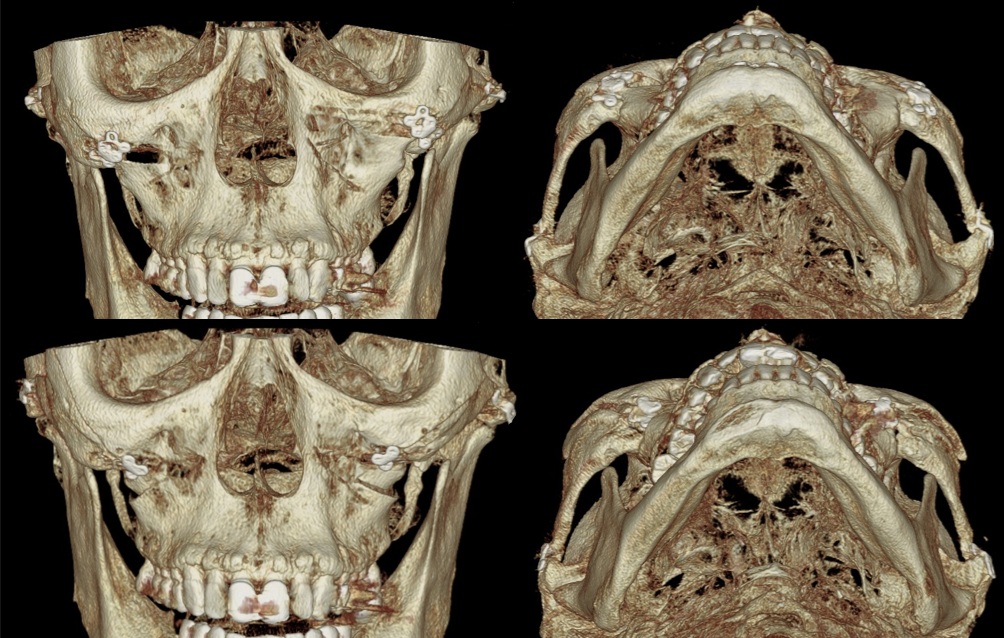
By modifying the osteotomy design itself, revision surgery can often create a much more noticeable contour improvement compared to the original procedure.
Revision Surgery Requires Detailed Structural Analysis
Secondary cheekbone surgery is more complex than primary surgery because:
- previous fixation plates already exist,
- bone healing patterns vary,
- and soft tissue tension has changed after the first operation.
For this reason, careful CT analysis is essential before revision surgery.
The surgeon must evaluate:
- the previous osteotomy design,
- current fixation stability,
- residual prominence,
- and the relationship between the frontal and lateral cheekbone.
Final Thoughts
Revision cheekbone reduction surgery is not simply about moving the bone further inward.
The key is understanding why the first surgery did not create enough contour change.
In some patients, the previous osteotomy design is appropriate and additional setback along the same pathway can improve the result.
In others, the original osteotomy itself may have been positioned too laterally, requiring a completely new osteotomy design for a more effective reduction.
Especially in revision surgery, balanced reduction of both the 45-degree cheekbone and the lateral zygomatic arch is important for creating a naturally slimmer facial shape.
Rather than aggressive reduction alone, careful analysis of the previous surgical design and individualized planning are what ultimately create a smoother and more refined contour.

