Previous rhinoplasty can sometimes lead to a contracted nose, where scar tissue and structural weakening gradually shorten the nose, reduce tip projection, and create an unnatural appearance. Revision rhinoplasty focuses on restoring structural support rather than simply changing the external shape.
Patient Concern
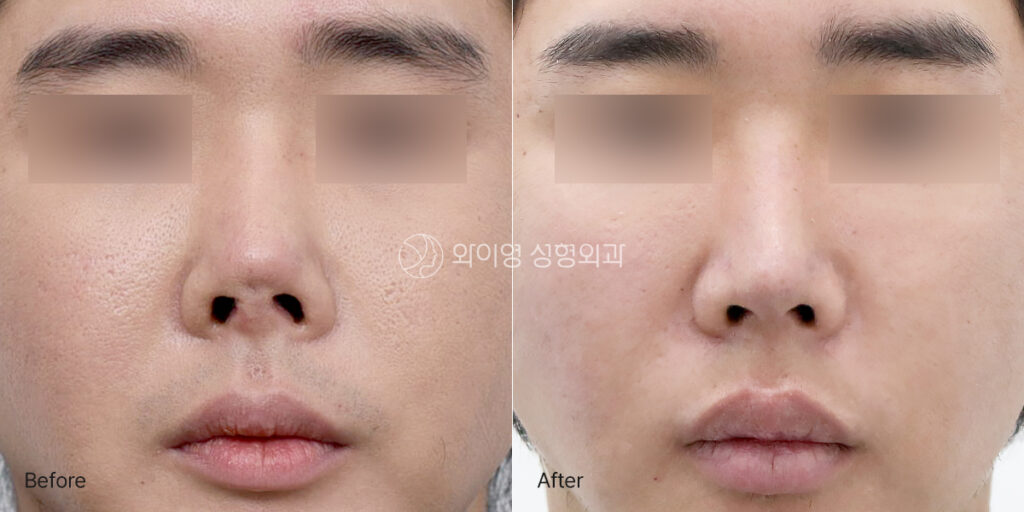
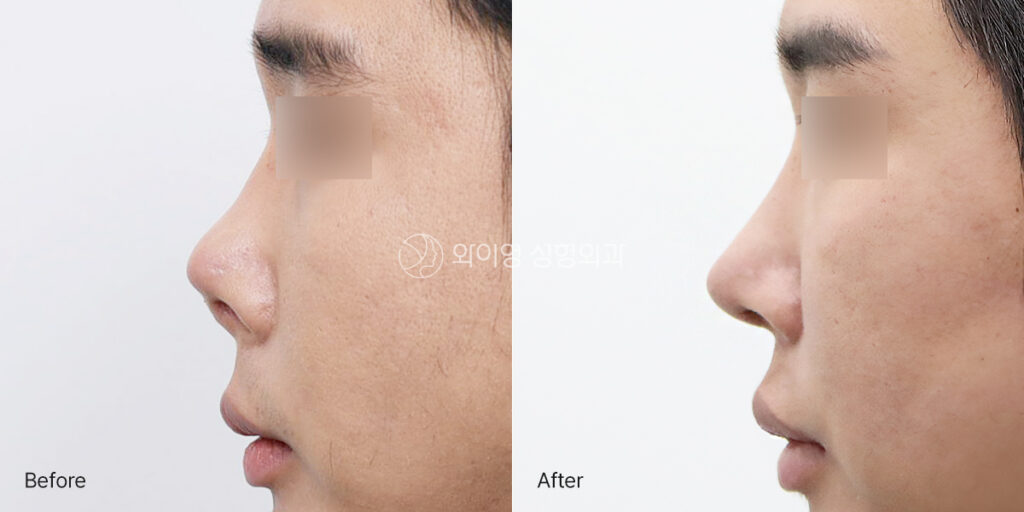
The patient presented with a contracted nose after previous rhinoplasty. The nose appeared shortened, the tip lacked adequate projection, and the overall nasal contour had become less balanced over time. The goal of revision surgery was to restore nasal length, reinforce structural support, and achieve a more natural profile.
Our Surgical Approach
Revision rhinoplasty was planned with an emphasis on structural reconstruction. Scar tissue was carefully addressed, weakened support was reinforced, and the nasal framework was rebuilt to restore both function and appearance.
Rather than creating a higher or larger nose, the objective was to establish stable support that could maintain long-term balance.
Postoperative Month 1
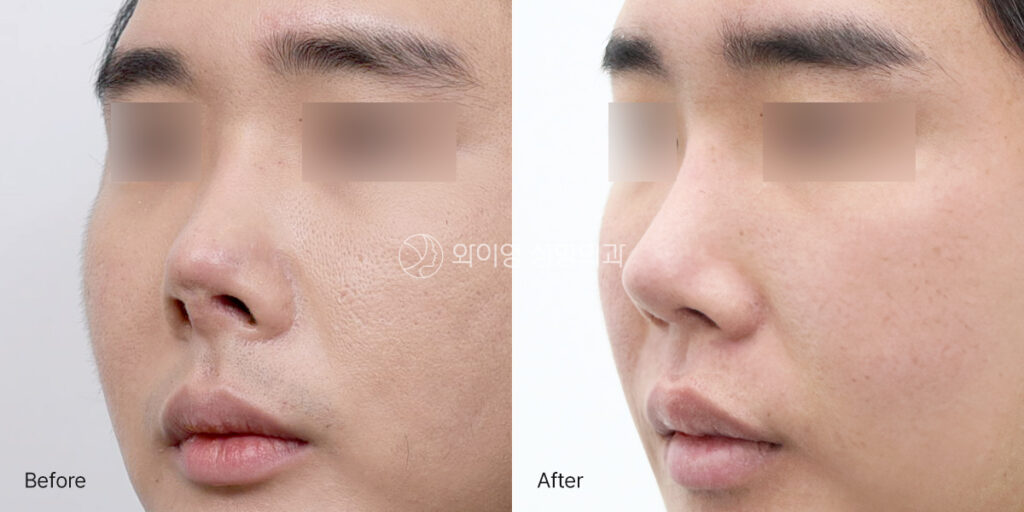
At one month after surgery, early improvement in nasal length and tip projection was already visible. Although postoperative healing was still ongoing, the reconstructed framework provided better support and a smoother, more natural nasal contour.
Final results continue to evolve as swelling subsides over the following months.
Our Surgical Philosophy
Successful contracted nose revision is not defined by simply making the nose look longer.
It begins with understanding why the nose became contracted in the first place. By restoring structural support and respecting the condition of the existing tissues, revision rhinoplasty aims to create results that remain stable, functional, and natural over time.
Related Insights
Learn more about contracted nose revision:
- Rhinoplasty in Korea: Implants, Rib Cartilage, Tip Surgery and Revision Explained
- Can a Contracted Nose Be Corrected with Revision Rhinoplasty?
Learn More About Revision Rhinoplasty
Explore our approach to structural revision rhinoplasty and individualized treatment planning.
Request a Revision Rhinoplasty Evaluation
If you are considering revision rhinoplasty or have concerns after previous nose surgery, a personalized structural evaluation is the first step toward achieving a stable, natural-looking result.
Online consultation is available for international patients.

