One of the most common questions patients ask after rhinoplasty is:
“When will my nose finally look normal?”
How long does rhinoplasty swelling last?
Most visible swelling improves significantly within the first few weeks to 3 months after rhinoplasty. However, residual swelling—especially at the nasal tip—can take 6 to 12 months to fully resolve. Patients with thick skin, a bulbous tip, or revision rhinoplasty may take even longer.
Rhinoplasty recovery can be confusing because the nose often looks much better within the first few weeks, but that does not mean all of the swelling is gone.
The bridge and the tip also heal at different speeds. Tip swelling usually lasts much longer than swelling along the bridge.
This is especially true in patients with thick skin, a bulbous nasal tip, or those who have had soft tissue grafting in the tip.
So, what should you actually expect after rhinoplasty?
Here is a general timeline.
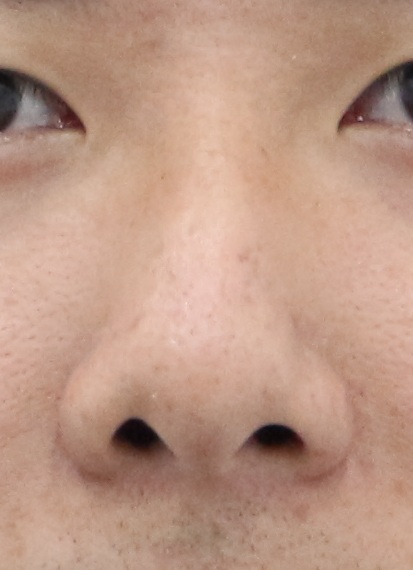
1 Week After Rhinoplasty
The first week is usually when swelling is most noticeable.
There may be swelling around the nose, eyes, and cheeks, and some bruising may still be present.
When the splint comes off, some patients are surprised by what they see. The nose may look wider than expected, and the tip may look round, large, or stiff.
This is completely different from the final result.
At this stage, swelling can hide much of the shape created during surgery.
The nose you see at one week is not your final nose.
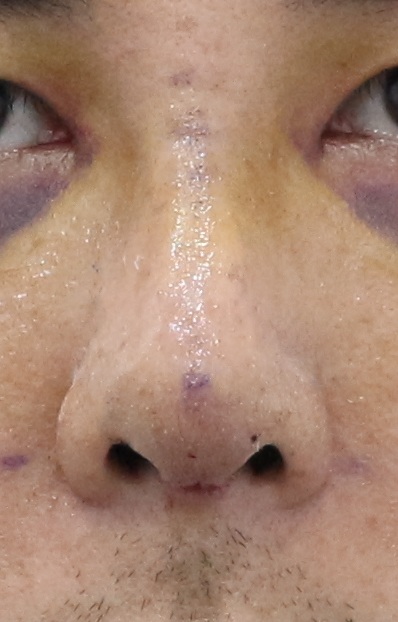
2 Weeks After Rhinoplasty
By two weeks, most of the obvious swelling and bruising has improved significantly.
Many patients feel comfortable returning to work and normal daily activities.
However, the nose may still look slightly wide in photographs, especially from the front. The tip can still appear round or poorly defined.
It is also common for one side to look slightly different from the other.
Swelling does not always disappear evenly. One side may improve faster than the other, creating temporary asymmetry during recovery.
This type of temporary asymmetry can be even more noticeable after revision rhinoplasty, when swelling and scar tissue may heal differently on each side.
1 Month After Rhinoplasty: Often the Most Confusing Stage
One month can actually be one of the more difficult stages of rhinoplasty recovery.
From the outside, the nose may look mostly healed. But there can still be significant swelling inside the tissues—especially at the nasal tip.
Patients sometimes tell me:
“My bridge looks good, but why is my tip still so big?”
This is particularly common in patients who originally had a bulbous nose, especially when thick skin was one of the main reasons the tip looked large before surgery.
It can also be more noticeable in patients who had soft tissue grafting or other tissue added around the nasal tip.
The structure underneath may already be narrower and more refined, but the swollen soft tissue and skin can temporarily hide that definition.
This is why I do not judge the final tip shape at one month.
Patients with a naturally wide or rounded tip may also find it helpful to understand why a bulbous nose can remain wide during early rhinoplasty recovery.

Sometimes Swelling Seems to Stop Improving
Another thing patients should know is that recovery is not always a smooth, steady process.
Sometimes between one and two months after surgery, patients enter what feels like a plateau.
The swelling improved quickly at first, but then the nose seems to stop changing.
Patients may start wondering:
“Is this it?”
Usually, it isn’t.
I often see patients whose nasal tip seems almost unchanged for several weeks and then looks noticeably different between the second and third month.
The tip may suddenly appear smaller, more defined, and more natural.
Of course, the change did not actually happen overnight. It is simply the point when enough swelling has disappeared for the underlying shape to become visible.
3 Months After Rhinoplasty
At around three months, the overall shape of the nose is usually much easier to appreciate.
The bridge looks more natural, and the tip often begins to show better definition.
The tip may also start to feel softer.
For many patients, this is the stage when they begin to recognize the nose that was planned before surgery.
Still, three months does not mean the healing process is finished.
Patients with thick skin, significant tip work, or revision rhinoplasty may continue to see changes for many more months.
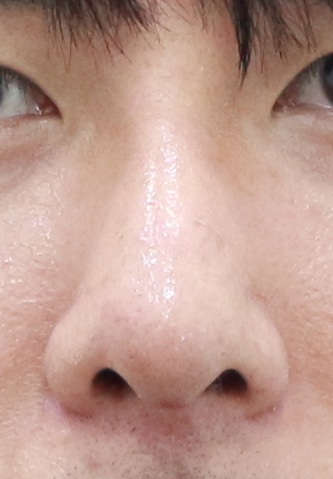
6 Months After Rhinoplasty
By six months, most patients are much closer to their final result.
The tip is usually noticeably less swollen, and its shape is clearer from the front and three-quarter views.
The nose also tends to feel more natural as the tissues continue to soften.
For patients who started with a wide or bulbous tip, comparing one-month and six-month photographs can sometimes show a surprisingly large difference.
This is why patience during the early months is so important.
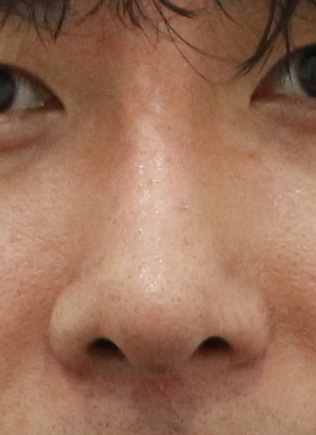
1 Year After Rhinoplasty
One year is generally a good time to evaluate the final result of rhinoplasty.
However, even after one year, very small changes may continue in some patients.
This is more common with:
- Thick nasal skin
- A bulbous nasal tip
- Extensive tip surgery
- Revision rhinoplasty
- Significant scar tissue
Every nose heals differently, so the timeline should always be considered a general guide rather than an exact schedule.
Why Does Nasal Tip Swelling Last So Long?
The nasal tip is a complex area made of cartilage, soft tissue, and skin.
During tip rhinoplasty, these tissues may need to be reshaped, repositioned, supported with cartilage grafts, or adjusted in several different layers.
Because of this, swelling in the tip can take longer to disappear than swelling along the nasal bridge.
Skin thickness also matters.
If a patient has thick nasal skin, even a beautifully shaped cartilage framework underneath may not look sharply defined right away.
The underlying structure can change immediately during surgery. The skin and soft tissue need time to adapt to that new structure.
That process takes time.
What Can Affect How Long Swelling Lasts?
There is no single recovery timeline that applies to everyone.
The amount and duration of swelling can be affected by skin thickness, how much work was performed on the nasal tip, whether the nasal bones were repositioned, whether soft tissue or cartilage grafts were used, and whether the operation was a primary or revision rhinoplasty.
Revision rhinoplasty can be particularly unpredictable because previous surgery often leaves scar tissue inside the nose.
Individual healing patterns also make a difference. Two patients who undergo similar procedures may not look the same at one month—or even at three months.
When Should You Contact Your Surgeon?
Some swelling and temporary asymmetry are normal during rhinoplasty recovery.
However, swelling that suddenly becomes significantly worse should not simply be assumed to be part of normal healing.
Contact your surgeon if you develop increasing pain, significant redness, warmth, drainage, fever, or a sudden change in swelling.
If something about your recovery concerns you, it is always better to have your surgeon examine it rather than trying to judge the situation from photographs alone.
The Most Important Thing to Remember
Rhinoplasty recovery is a process, not a single moment.
A nose that still looks wide or swollen at one month does not necessarily mean that it will remain that way.
This is particularly important for patients with a bulbous tip or thick skin. In these patients, the nasal tip may be one of the last areas to show its final definition.
Sometimes there is even a frustrating period when nothing seems to be changing—followed by a noticeable improvement between two and three months.
The surgery creates the new structure.
Healing is what gradually reveals it.
FAQ
1. When does the nasal tip swelling go down after rhinoplasty?
Nasal tip swelling usually lasts longer than swelling along the bridge. Many patients notice a significant improvement between 2 and 3 months, but the tip may continue to refine for 6 to 12 months, especially in patients with thick skin, a bulbous tip, or revision rhinoplasty.
2. Why does my nose still look big one month after rhinoplasty?
At one month, the nose can look much better overall while the tip is still swollen. This is especially common in patients with thick nasal skin, a bulbous tip, or those who had soft tissue or cartilage grafting. The underlying structure may already be smaller, but swelling can temporarily hide the final definition.
3. Can rhinoplasty swelling get worse or stop improving?
Swelling does not always improve at a steady rate. Some patients notice a plateau between one and two months, when the nose seems to stop changing for several weeks. It is common for the tip to become noticeably more defined between the second and third month as deeper swelling gradually decreases.
Related Articles
- Bulbous Nose Surgery: A Natural Tip Refinement Case (3 Months After Surgery)
- Why Is My Nose Still Crooked After Revision Rhinoplasty?
- Revision Rhinoplasty in Korea

