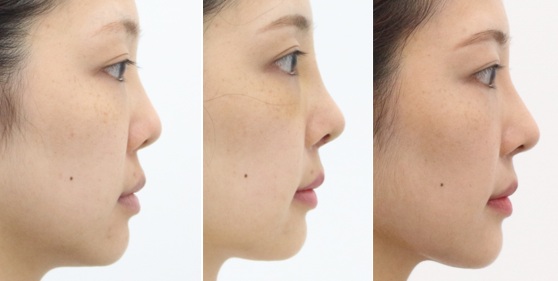
An upturned nose after rhinoplasty is dften temporary during early healing. Swelling and tissue stiffness can make the nasal tip look higher and the nostrils more visible, but persistent tip rotation after healing may be related to the underlying nasal structure.
It can be unsettling to look in the mirror after rhinoplasty and feel that your nose looks shorter or more upturned than expected.
Some patients notice that their nostrils are more visible from the front. Others feel that the nasal tip looks too high, especially during the first few weeks after surgery.
The good news is that an upturned appearance early after rhinoplasty does not necessarily mean that the nose has been overcorrected.
In many cases, it is part of the normal healing process.
Why Can You Have an Upturned Nose After Rhinoplasty?
Rhinoplasty changes more than the height of the nasal bridge.
The surgeon may also adjust the position, projection, and rotation of the nasal tip. These changes affect how long the nose looks and how much of the nostrils are visible from the front.
Immediately after surgery, several factors can make the tip appear higher than it will later.
1. Swelling Can Change the Position of the Nasal Tip
Swelling does not occur evenly throughout the nose.
During the early healing period, swelling around the nasal tip and columella can temporarily exaggerate the angle between the nose and upper lip.
As a result, the tip may look:
- higher than expected
- more rotated upward
- shorter from the front
- more rounded
- associated with increased nostril visibility
This can be particularly noticeable during the first few weeks.
As swelling gradually decreases, the nose often begins to look less upturned and more natural.
2. The Tip Is Often Supported Firmly During Rhinoplasty
A stable nasal tip is important for maintaining a good long-term result.
During rhinoplasty, cartilage grafts or suturing techniques may be used to create and support the new tip position.
Early after surgery, this support combined with postoperative stiffness can make the tip look very defined or slightly higher than expected.
But the nose you see at one or two weeks is not the final nose.
As the tissues soften and swelling resolves, the transition between the bridge, tip, and upper lip usually becomes more natural.
3. Tip Rotation Changes How Long the Nose Looks
A small change in tip rotation can create a surprisingly large visual difference.
When the tip rotates upward, the nose can appear shorter even if its actual structural length has not changed dramatically.
It can also make the nostrils more visible from the front.
This is why rhinoplasty should not be planned by looking only at the nasal bridge.
The surgeon has to consider the relationship between:
- nasal length
- tip projection
- tip rotation
- nostril exposure
- columella position
- the angle between the nose and upper lip
These elements need to work together.
What About Patients Who Already Have a Short or Upturned Nose?
This is where surgical planning becomes particularly important.
A patient who naturally has a short nose or visible nostrils may require a very different approach from someone with a long, drooping nasal tip.
In short nose rhinoplasty, the goal is often not to rotate the tip upward.
Instead, surgery may need to create better nasal length while controlling the position of the tip.
Depending on the anatomy, cartilage grafting may be needed to provide enough structural support.
Simply making the bridge higher does not necessarily make a short nose look longer.
In fact, if the relationship between the bridge and tip is not properly designed, the nose can look even shorter.
Why Are My Nostrils More Visible After Rhinoplasty?
Nostril visibility is closely related to tip rotation.
If the tip looks temporarily elevated after surgery, the nostrils may also look more exposed.
Swelling around the columella and nasal base can make this effect more noticeable during early recovery.
This does not automatically mean that too much nostril show will remain permanently.
What matters is how the nasal tip settles as healing progresses.
Will the Nasal Tip Drop After Rhinoplasty?
Some change in tip position can occur during healing.
However, patients sometimes misunderstand the phrase “the tip will drop.”
The goal is not for a well-supported nasal tip to collapse or significantly fall downward.
Rather, early swelling and tissue stiffness gradually decrease, allowing the nose to look softer and more natural.
A properly supported nasal tip should maintain its intended position while losing the exaggerated postoperative appearance.
When Should I Judge Whether My Nose Is Too Upturned?
Not during the first few weeks.
Early rhinoplasty photos can be misleading because swelling, stiffness, and changes in facial expression can all affect how the nose looks.
At around one month, the nose may already look much more natural, but the tip is still healing.
Further refinement continues over the following months.
For many patients, it is more useful to evaluate the direction of change rather than judging the final result too early.
Ask:
“Does my nose look less swollen and more natural than it did a month ago?”
rather than:
“Is this my final nose?”
When Is an Upturned Nose More Than Just Swelling?
Not every upturned appearance is caused by postoperative swelling.
In some cases, excessive tip rotation, inadequate nasal length, loss of structural support, or previous surgery can contribute to persistent nostril exposure or a nose that appears too short.
The important distinction is timing.
An upturned appearance during early recovery and a persistently over-rotated nasal tip after healing are very different situations.
This is one reason revision rhinoplasty should generally not be considered simply because the nose looks unfamiliar during the early postoperative period.
Rhinoplasty Is About Balance, Not Just Height
Patients often focus on how high or low the nasal bridge should be.
But a natural-looking rhinoplasty depends just as much on the position of the nasal tip.
A beautiful bridge with excessive tip rotation can still make the nose look unnatural.
Likewise, simply lowering the tip is not always the answer.
The goal is to create a balanced relationship between the bridge, nasal length, tip projection, tip rotation, nostrils, and overall facial proportions.
Especially in patients with a naturally short nose, these relationships should be considered before surgery rather than corrected afterward.
Final Thoughts
If your nose looks unusually short or upturned soon after rhinoplasty, it may be too early to judge the final result.
Swelling, tissue stiffness, and temporary changes around the nasal tip can make the tip appear higher and the nostrils more visible during early recovery.
Over the following months, the nose usually becomes softer and more natural as swelling resolves.
However, a persistently short or excessively upturned nose after adequate healing may be related to the actual position and structural support of the nasal tip rather than swelling alone.
The key is knowing when you are seeing normal healing—and when you are seeing the true nasal structure.
Frequently Asked Questions
Why does my nose look too upturned after rhinoplasty?
Early swelling, tissue stiffness, and the newly supported position of the nasal tip can make the nose look more upturned than expected. This can also make the nose appear shorter and the nostrils more visible. The appearance often becomes softer and more natural as healing progresses.
Will the tip of my nose drop after rhinoplasty?
The nasal tip may appear to settle slightly as swelling decreases and the tissues soften. However, a properly supported tip should not significantly drop or collapse. What patients often perceive as the tip “dropping” is actually the gradual resolution of swelling and stiffness.
When can I tell if my nose is permanently too upturned?
It is usually too early to judge the final tip position during the first few weeks or months after rhinoplasty. Nasal tip swelling can take many months to resolve. If excessive tip rotation or nostril show persists after adequate healing, the underlying nasal structure and tip support should be evaluated.
Related Articles

