Especially when the previous osteotomy lines are not smoothly connected, or when cortical bone was not adequately contoured despite differences in bone thickness across areas, the underlying bony contour can become visible through the skin.
As a result, the facial line may appear more irregular, bulky, and less refined rather than slimmer and smoother.
What We Found on the CT Scan
This patient visited us for revision surgery due to irregularities along the lower jawline after previous jaw contour surgery.
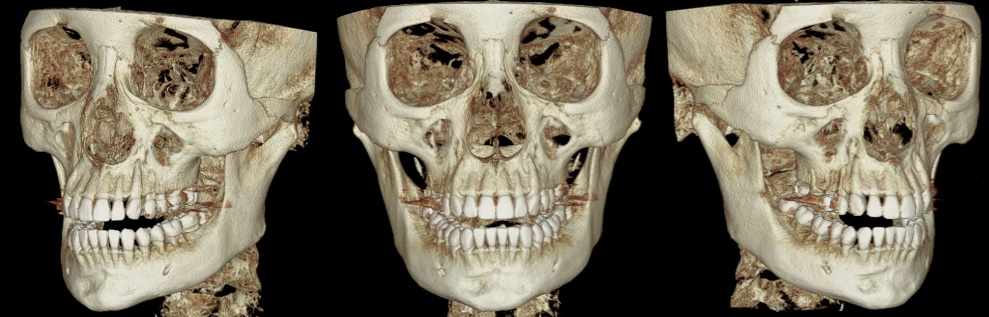
On the CT scan, the previous osteotomy line had created partial step deformities, and the remaining outer cortex caused the jawline to appear blunt and uneven rather than smooth and continuous.
3D CT before revision jaw surgery showing step deformity and uneven mandibular contour after previous jaw reduction surgery.
The Key to Revision Surgery: Creating Smooth Continuity
In this revision surgery, the goal was not simply “removing more bone.”
Instead, we focused on restoring a smoother and more natural flow along the inferior border of the mandible.
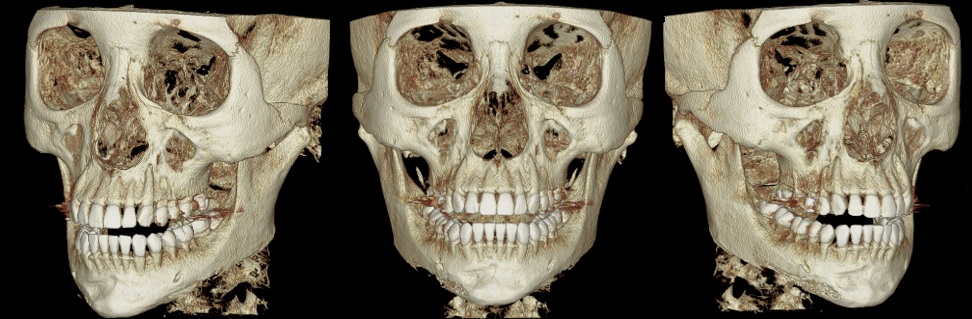
By carefully contouring the cortical bone as well, we were able to create a softer and more continuous shadow line when light hits the jawline.
Postoperative 3D CT after revision jaw contour surgery demonstrating smoother mandibular contour and improved jawline continuity.
Postoperative Changes
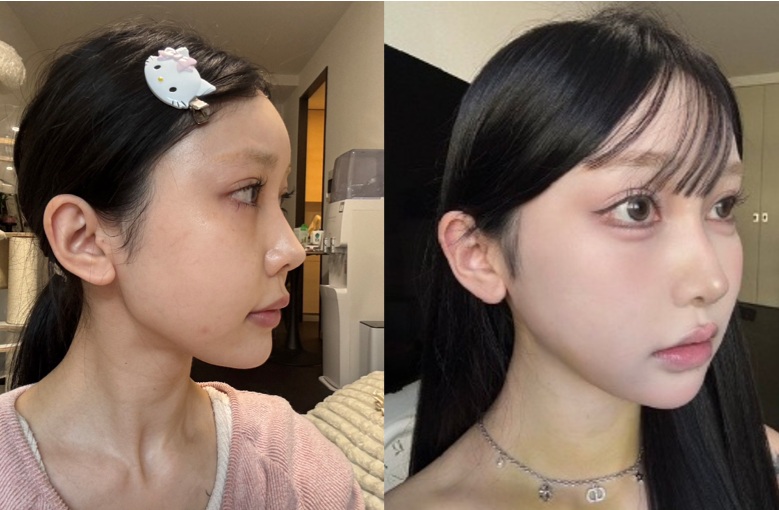
After surgery, the jawline appeared significantly smoother and more natural from both frontal and side views.
Rather than creating an aggressively sharp V-line, the result was a softer, more feminine lower facial contour.
Early postoperative result at 1 week after revision jaw contour surgery demonstrating improved jawline smoothness and facial balance.
This case demonstrates how revision jaw contour surgery is not simply about removing more bone, but about restoring smoother mandibular continuity and natural facial balance.