One of the questions I hear frequently from patients is:
“Which cartilage is best for my rhinoplasty?”
My answer is that there is no single cartilage that is best for every patient.
Septal cartilage, donor rib cartilage, and your own rib cartilage can all be useful materials in rhinoplasty. The important question is not which material is considered “better,” but which material can provide the right amount of support for your particular nose and the operation you need.
Before choosing a graft material, I look at the strength and size of the patient’s septal cartilage, whether the nose has been injured or operated on before, how much cartilage will be needed, the condition of the skin and soft tissue, and what kind of structural correction we are trying to achieve.
In other words, I prefer to choose the cartilage after understanding the nose—not choose the cartilage first and then design the surgery around it.
When Is Septal Cartilage Enough for Rhinoplasty?
Whenever possible, the first thing I evaluate is the patient’s own septal cartilage.
The septum is the structure that divides the inside of the nose into the right and left sides. Part of its cartilage can sometimes be harvested while preserving the portion necessary to maintain nasal support.
If the septal cartilage is large enough, strong enough, and healthy, it can be an excellent graft material.
For a patient with good septal cartilage who only requires a moderate amount of structural support, there may be no reason to harvest rib cartilage.
This is particularly important because patients sometimes come to consultation believing that a more extensive material automatically produces a better result.
It does not.
More cartilage does not necessarily mean better rhinoplasty.
The goal is to use enough structural material to accomplish what the nose requires without performing an unnecessary procedure.
When Is Septal Cartilage Not Enough?
Not everyone has a strong or sufficiently large septum.
Some patients naturally have relatively small or weak septal cartilage. In others, the cartilage may have been weakened by previous surgery.
Trauma is another important consideration.
A nose that has been injured may appear relatively normal from the outside while the septum inside has been fractured, bent, weakened, or otherwise damaged.
In these situations, I may determine that the remaining septal cartilage cannot provide the strength or amount of graft material necessary for a stable reconstruction.
That is when I begin considering rib cartilage.
This is especially relevant in complex revision rhinoplasty, significantly damaged noses, or cases in which substantial structural support needs to be rebuilt.
If Rib Cartilage Is Needed, Does It Have to Be My Own?
No.
There are two main options I discuss with patients:
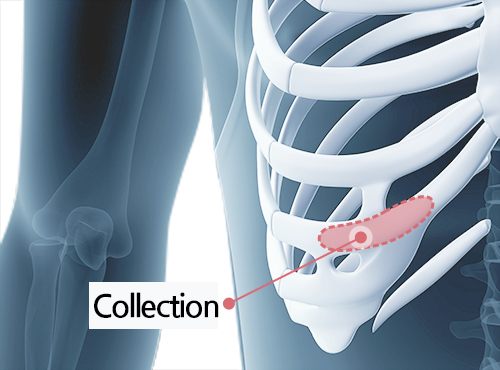
Autologous rib cartilage is cartilage harvested from the patient’s own rib.
Donor rib cartilage is processed cartilage obtained from donor tissue and prepared for medical use.
Both can have a role in rhinoplasty.
The decision is not simply a matter of saying that one is good and the other is bad. I consider what we need to accomplish surgically and what matters to the individual patient.
When Might I Consider Donor Rib Cartilage?
There are situations in which donor rib cartilage can be a reasonable option.
For example, I may consider it in an older patient, particularly someone over 50, depending on the individual circumstances.
I also consider it when only a relatively small amount of rib cartilage is necessary.
Another important factor is the patient’s concern about the donor-site incision.
Harvesting your own rib requires a small incision on the chest. Although I try to keep this incision as limited as possible, a scar cannot be eliminated completely.
For someone who is particularly sensitive about having a chest scar, avoiding an additional donor site may be an important consideration.
In these circumstances, donor rib cartilage may allow us to obtain the graft material we need without harvesting cartilage from the patient’s chest.
When Do I Prefer the Patient’s Own Rib Cartilage?
There are other situations where I am more likely to recommend autologous rib cartilage.
One is when the nose has sustained significant trauma and requires stronger or more extensive structural reconstruction.
Another is when I expect to need a larger amount of cartilage.
This can occur in complicated revision cases where previous surgery has left very little usable cartilage or where several parts of the nasal framework need to be rebuilt.
Patient preference also matters.
Some patients simply do not feel comfortable having donor tissue placed in their body. If autologous rib cartilage is medically appropriate and the patient strongly prefers to use their own tissue, that preference becomes part of our decision.
This is why two patients who appear to have similar noses may receive different recommendations.
Their internal anatomy and surgical requirements may be very different.
Does Revision Rhinoplasty Always Require Rib Cartilage?
No.
This is an important misconception.
A patient may have had previous rhinoplasty and still have sufficient healthy septal cartilage for the correction that is needed.
If the available septal cartilage is strong enough and there is enough of it, I do not believe rib cartilage should be used simply because the operation is a revision.
On the other hand, after multiple operations, the situation can be very different.
Previous surgery may have removed much of the septal cartilage, altered the normal anatomy, created scar tissue, or weakened the structural support of the nose.
In those cases, rib cartilage may provide material that is simply not available within the nose anymore.
The number of previous operations matters, but what remains inside the nose matters more.
Why Previous Nasal Trauma Changes the Decision
A history of nasal trauma deserves special attention.
When I evaluate an injured nose, I am not only looking at whether the nose appears crooked.
I want to know what happened to the underlying framework.
The nasal bones may have healed asymmetrically. The septum may be fractured or distorted. Cartilage may have lost some of its original strength, and breathing may also be affected.
If I am rebuilding a nose with compromised structural support, the graft needs to do more than create an attractive contour.
It needs to help support the reconstructed nose.
For this reason, significant trauma can shift my preference toward autologous rib cartilage, particularly when substantial reconstruction is necessary.
What About the Patient’s Age?
Age is one factor, but it should never be the only factor.
For example, in patients over 50, I may be more inclined to consider donor rib cartilage when rib grafting is needed, particularly if the required amount is limited or avoiding a chest incision is important to the patient.
But I would not make the decision based on age alone.
A patient’s anatomy, the condition of the existing cartilage, previous surgery or trauma, the amount of reconstruction required, and personal preferences all need to be considered together.
There is no meaningful formula that says:
“Over 50 = donor rib.”
That would oversimplify a surgical decision that should be individualized.
So, Which Cartilage Is Best for Rhinoplasty?
I would phrase the question differently.
Instead of asking:
“What is the best cartilage?”
I would ask:
“What does my nose need?”
If your septal cartilage is healthy, strong, and sufficient, septal cartilage may be all that is necessary.
If it is weak, small, previously damaged, or insufficient for the reconstruction, rib cartilage may be needed.
If only a limited amount of rib cartilage is necessary, if avoiding a chest incision is particularly important, or depending on age and other clinical factors, donor rib cartilage may be considered.
If the nose has been significantly injured, a larger amount of cartilage is necessary, extensive reconstruction is required, or the patient prefers not to use donor tissue, I may favor autologous rib cartilage.
There is no material that I automatically use for every rhinoplasty.
The graft should fit the surgical plan. The surgical plan should not be forced to fit the graft.
That distinction is particularly important in revision and reconstructive rhinoplasty.
When planning rhinoplasty, I first evaluate whether the patient’s septal cartilage is large and strong enough to provide the structural support required for the surgery.
If the septal cartilage is sufficiently strong, I generally prefer to use it. However, if it is small, weak, previously damaged, or insufficient for the amount of reconstruction required, rib cartilage may be a better option.
When rib cartilage is needed, the next decision is whether to use donor rib cartilage or the patient’s own rib cartilage. This choice depends on several factors, including the patient’s age, the amount of cartilage required, previous trauma, concern about a chest scar, and the patient’s preference regarding donor tissue.
This is why the choice of cartilage should be made after evaluating the nose, rather than choosing a material first and designing the operation around it.
Patients considering surgery in Seoul can also read our comprehensive guide to rhinoplasty in Korea, including primary and revision surgery, implants, cartilage grafting, and surgical planning.
Frequently Asked Questions About Cartilage for Rhinoplasty
Q. Is septal cartilage or rib cartilage better for rhinoplasty?
Neither is automatically better. If the septal cartilage is strong and sufficient for the planned correction, it may provide all the graft material needed. Rib cartilage may be considered when the septum is weak, damaged, insufficient, or when more extensive structural reconstruction is required.
Q. Does revision rhinoplasty always require rib cartilage?
No. Some revision patients still have sufficient healthy septal cartilage. The decision depends on what cartilage remains after previous surgery and how much structural support is required for the planned correction.
Q. What is the difference between donor rib and autologous rib cartilage?
Autologous rib cartilage is harvested from the patient’s own rib, while donor rib cartilage is processed tissue obtained from a donor. The choice depends on factors such as the amount of cartilage required, previous trauma, age, concern about a chest incision, and the patient’s preference regarding donor tissue.
Q. Why might autologous rib cartilage be preferred after nasal trauma?
Significant trauma can damage or weaken the septum and other supporting structures of the nose. When substantial structural reconstruction or a larger amount of graft material is required, autologous rib cartilage may be considered because it can provide sufficient material for reconstruction.

